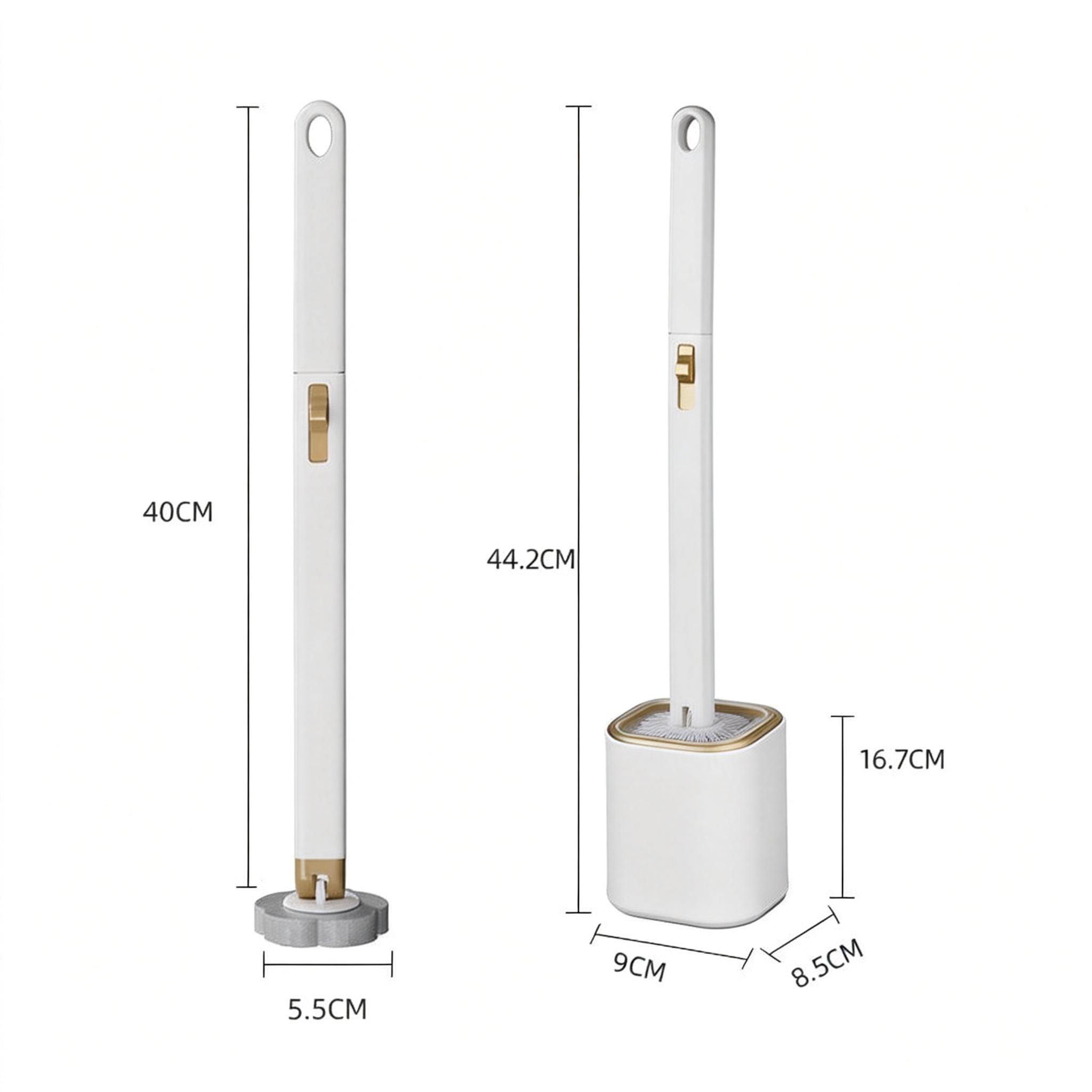

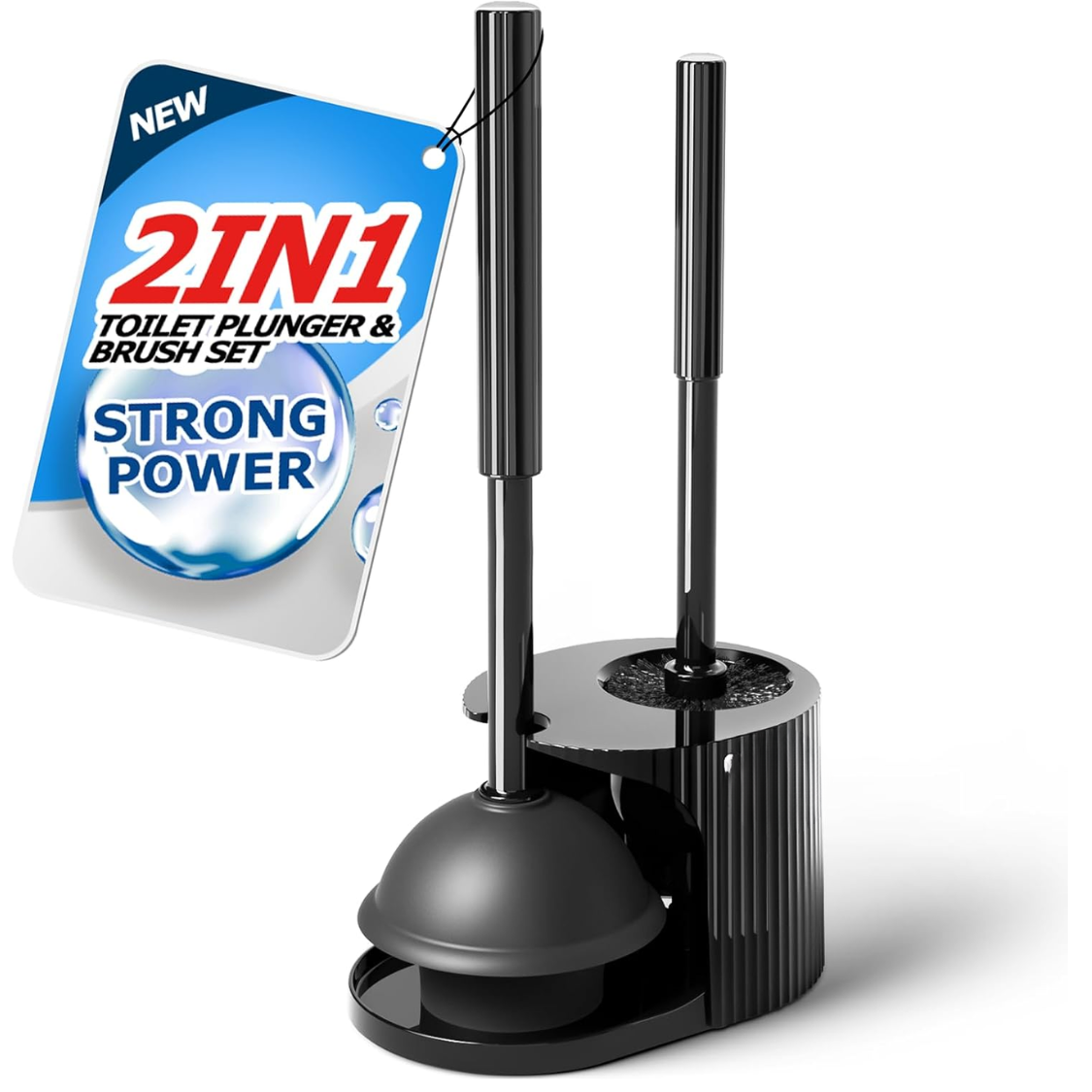
Photos from current listings. Actual item, color, and included accessories may vary.
Toilet Brush And Plunger Set Buying Guide
A toilet brush and plunger set combines two essential bathroom hygiene tools, where the primary trade-off is between plastic (light, cheap, prone to cracking) and metal (durable, rust-resistant, heavier) construction, plus brush-head style (bristle vs. disposable) and plunger type (cup vs. bellows). Choose a metal-handled set with a bellows plunger and replaceable brush head for long-term reliability; skip thin plastic handles and flat-cup plungers that fail under pressure.
At a glance
- Category
- Bathroom Accessories
- Last updated
- Nov 22, 2026
Current offers
Highlights
- Metal handles (stainless steel or coated aluminum) resist bending and rust far better than hollow plastic, which snaps at the ferrule under repeated plunging force.
- Bellows-style plungers generate higher pressure and seal better on modern low-flow toilets than standard flat-cup plungers, which are better for older high-flow bowls.
- Disposable brush heads (one-click replacement) eliminate visible debris and odor but require ongoing refill purchases; traditional bristle heads last longer but need drip-drying.
- Ventilated or open-bottom holders allow brush heads to dry between uses, reducing bacteria growth and odor compared to closed canisters.
Best use cases
- Best fit: households with low-flow or dual-flush toilets — pair a bellows plunger with a disposable-head brush for maximum seal pressure and hygiene.
- Best fit: rental or guest bathrooms — choose a compact metal-handled set with a closed holder to keep tools out of sight and minimize maintenance.
- Wrong fit: heavy-duty commercial or frequent-clog use — skip disposable-head brushes (refill cost adds up) and thin plastic handles; opt for a metal bristle brush and industrial bellows plunger.
- Wrong fit: small powder rooms with no floor space — avoid tall freestanding sets; a wall-mounted or compact holder keeps tools off the floor.
Buying tips
- Measure your toilet bowl height and rim: plunger cups need at least 2 inches of water coverage to seal; bellows plungers work in both shallow and deep bowls.
- Check handle length: standard sets are 15–20 inches; if you have a deep bowl or limited mobility, choose a 22-inch or extended handle for leverage.
- Prefer stainless steel or powder-coated metal ferrules (the collar connecting handle to brush/plunger) over exposed plastic threads, which strip and loosen over time.
- For disposable-head systems, confirm refill availability and compatibility — proprietary click mechanisms lock you into one brand's refills.
Specs
| Handle Material | Stainless steel / coated aluminum vs plastic |
|---|---|
| Plunger Type | Bellows (low-flow) vs cup (high-flow) |
| Brush Head | Disposable refill vs traditional bristle |
| Holder Design | Ventilated open-bottom vs closed canister |
Related searches
What to check before buying
- Measure the floor space or wall area where the set will sit; confirm holder footprint fits without blocking the toilet or door swing.
- Check your toilet type: low-flow/dual-flush bowls benefit from bellows plungers; older high-flow bowls work with standard cup plungers.
- Verify the brush head material is compatible with your cleaning chemicals (avoid natural bristles with harsh bleach; synthetic bristles handle most cleaners).
- Confirm the holder has drainage or ventilation holes so wet brush heads don't sit in standing water and breed odor.
FAQ
Data sources: eBay / Amazon listings and product attribute feeds. Updated Nov 22, 2026.
Some links on this page are affiliate links. If you buy after clicking one, we may earn a commission at no extra cost to you. This does not change which products appear here or their order. Affiliate disclosure.