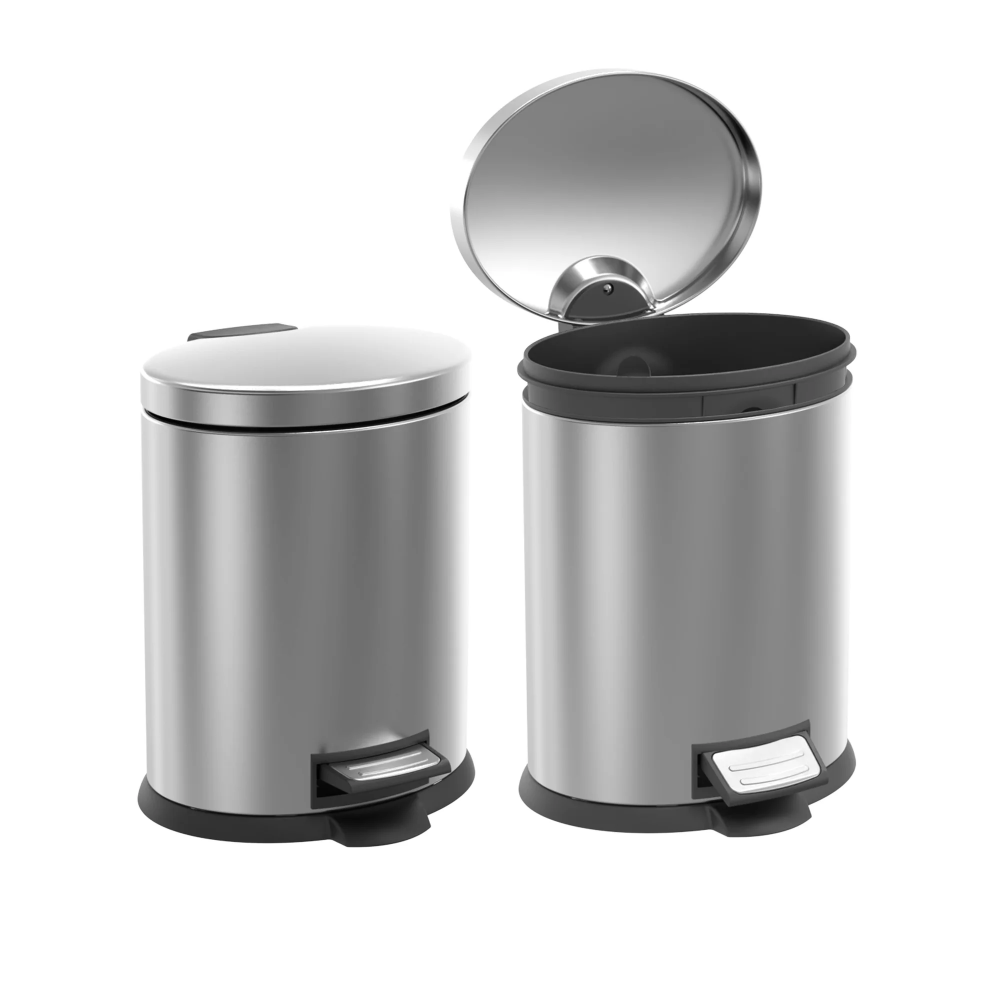

Photos from current listings. Actual item, color, and included accessories may vary.
Stainless Steel Bathroom Trash Can Buying Guide
A stainless steel bathroom trash can is a small-capacity (typically 1.3–2.6 gal) lidded bin chosen for corrosion resistance, odor containment, and easy cleaning in humid, tight spaces. The core trade-off is steel gauge and lid mechanism: thicker 410/304 stainless with a sealed step or soft-close lid resists dents and rust, while thin 0.3 mm shells and friction lids are the compromise tier. The decision rule: buy 0.4 mm+ 410 stainless with a replaceable step mechanism or sealed soft-close lid for daily bathroom use; skip sub-0.3 mm cosmetic shells and unsealed friction lids in wet rooms.
At a glance
- Category
- Bathroom Accessories
- Last updated
- Nov 22, 2026
Current offers
Highlights
- Stainless grade matters: 304 (18/8) resists pitting and cleaning chemicals best; 410 is magnetic, harder, and common in budget bath bins but can spot in high-humidity rooms.
- Shell thickness separates durable from disposable: 0.4–0.5 mm steel holds shape and resists dents; many budget bins use 0.25–0.3 mm that flexes and creases at the rim.
- Lid mechanism tiers: sealed step-pedal with metal linkage lasts years; soft-close damped hinges prevent slam noise; simple friction or press lids are cheapest and least odor-tight.
- Inner bucket design: a removable plastic inner liner makes bag changes and cleaning practical; bins without a liner require full-shell wiping and trap moisture at the base seam.
Best use cases
- Best fit: powder rooms and master baths needing odor control — pick a 1.3–1.6 gal step can with sealed lid and removable inner bucket; skip open-top or friction-lid bins in this wet, enclosed setting.
- Best fit: guest or half baths with limited floor space — choose a slim rectangular or corner-profile 1.3 gal bin; skip round 2.6 gal cans that waste footprint and look oversized next to a pedestal sink.
- Wrong fit: kitchens or high-volume rooms — a 1.3 gal bathroom bin fills in a day; step up to 2.6+ gal or a different segment rather than overfilling a small step can.
- Best fit: humid, coastal, or frequently mopped bathrooms — insist on 304 stainless or a coated 410 shell with sealed base; skip uncoated thin 410 that spots and rusts at the floor seam.
Buying tips
- Size by room: 1.3 gal (≈5 L) suits one to two people in a bath; 1.6–2.6 gal (6–10 L) suits family or guest baths; match height under 16 in to clear most vanity overhangs.
- Check steel grade and gauge: 304 stainless at 0.4 mm+ is the durable tier; 410 at 0.35 mm+ is acceptable dry-room budget; anything under 0.3 mm or labeled only 'stainless look' is cosmetic.
- Prioritize a removable inner bucket and a step pedal with metal (not all-plastic) linkage — these are the two parts that fail first on budget bins.
- Confirm lid sealing: a soft-close or gasketed step lid contains odor; open-top and loose friction lids do not, regardless of steel quality.
Specs
| Steel Grade | 304 (18/8) vs 410 magnetic |
|---|---|
| Shell Thickness | 0.4 mm+ durable / <0.3 mm cosmetic |
| Capacity | 1.3–2.6 gal (5–10 L) |
| Lid Mechanism | Sealed step / soft-close vs friction |
Related searches
What to check before buying
- Measure floor footprint and clearance: most 1.3 gal step cans are 10–12 in wide; verify it fits beside the toilet or vanity without blocking the door swing.
- Check the lid opens below any wall-mounted fixture or vanity overhang — step lids need 12–14 in of vertical clearance to open fully.
- Match bag size: 1.3 gal bins take 4–6 gal liners; confirm a standard liner size fits the inner bucket rim so the bag stays hidden.
- For humid or coastal rooms, verify 304 stainless or a coated finish and a sealed base; uncoated thin steel rusts at floor moisture lines.
FAQ
Data sources: eBay / Amazon listings and product attribute feeds. Updated Nov 22, 2026.
Some links on this page are affiliate links. If you buy after clicking one, we may earn a commission at no extra cost to you. This does not change which products appear here or their order. Affiliate disclosure.