
Photos from current listings. Actual item, color, and included accessories may vary.
Electric Towel Heater Buying Guide
Electric towel heaters are wall-mounted or freestanding racks that use resistive heating elements to warm and dry towels, primarily defined by their heating architecture (dry element vs. liquid-filled) and material grade. The core trade-off is between fast, lightweight aluminum dry-element racks and slower, higher-thermal-mass liquid-filled or carbon-steel units that hold heat longer. Choose a dry-element aluminum rack for quick daily towel warming; choose a liquid-filled or thick carbon-steel unit only if you need sustained radiant heat and can accept longer heat-up times.
At a glance
- Category
- Bathroom Accessories
- Last updated
- Nov 22, 2026
Current offers
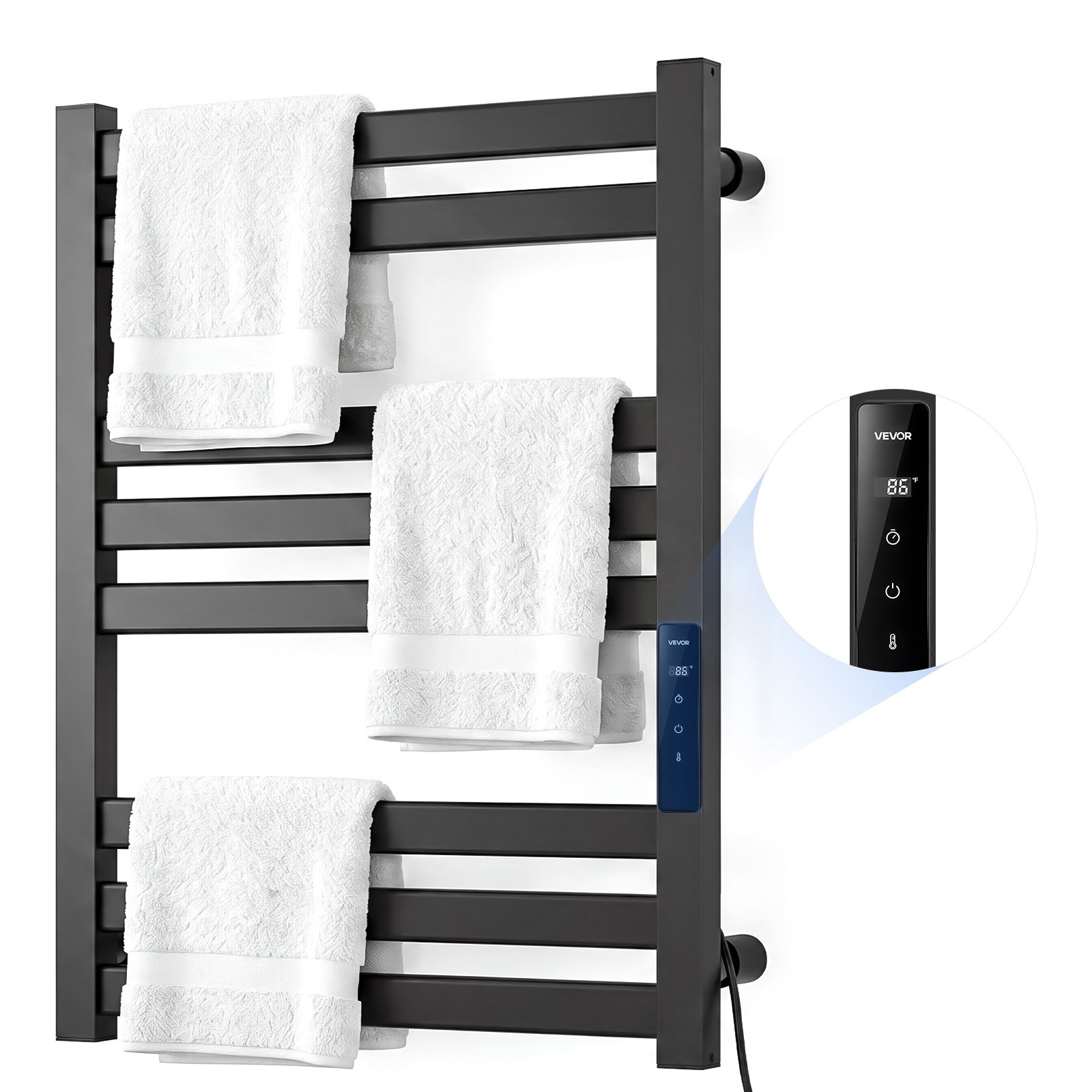 Heated Towel Warmer Rack for Bathroom Electric Wall Mounted 8 Bars, Aluminum Alloy Overheat Protection, with Touch Screen, 1-24H Timer, 32 to 131°F Adjustable, IPX4 Waterproof$98.99View on Mallflare
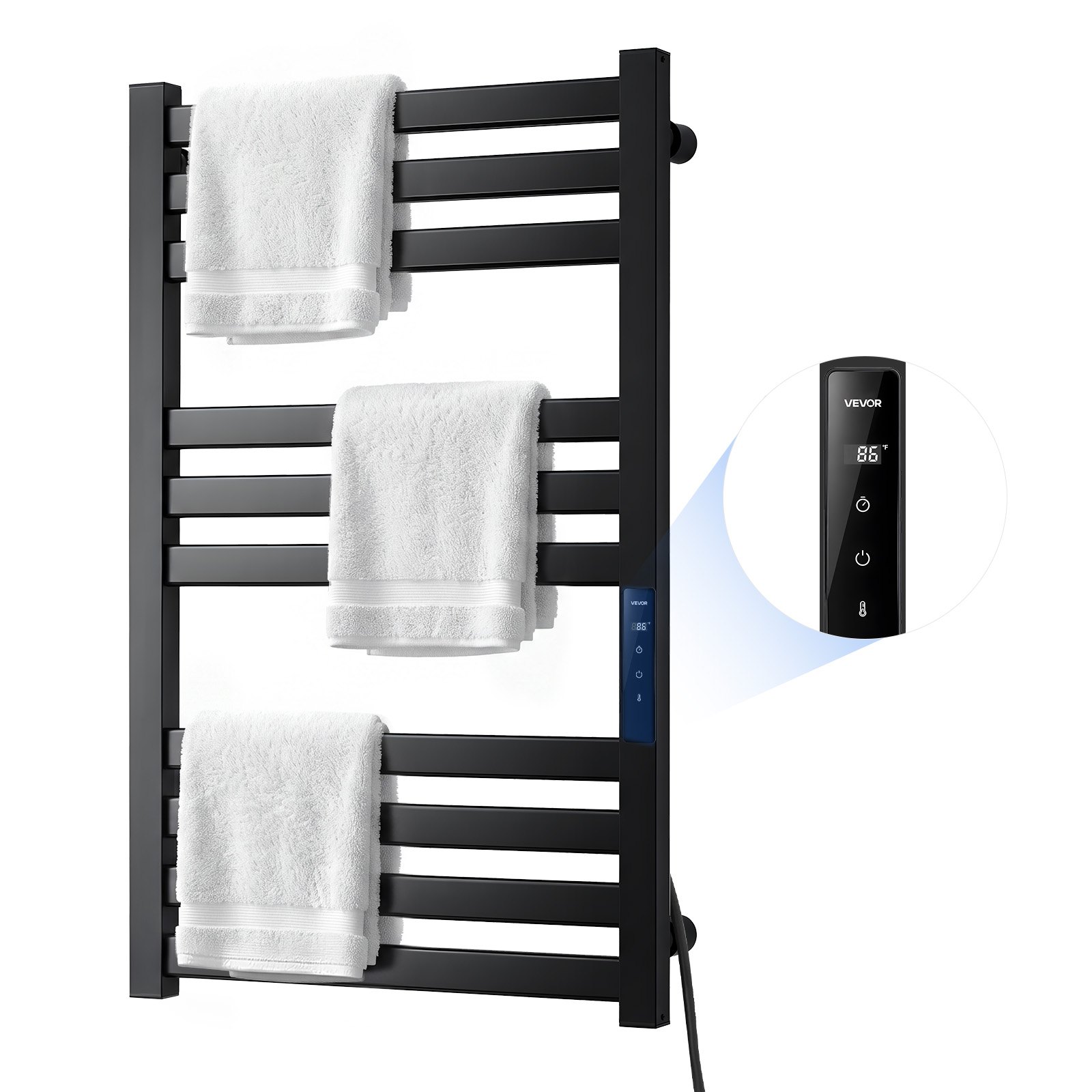 Heated Towel Warmer Rack for Bathroom Electric Wall Mounted 10 Bars, Aluminum Alloy Overheat Protection, with Touch Screen, 1-24H Timer, 32 to 131°F Adjustable, IPX4 Waterproof$100.99View on Mallflare
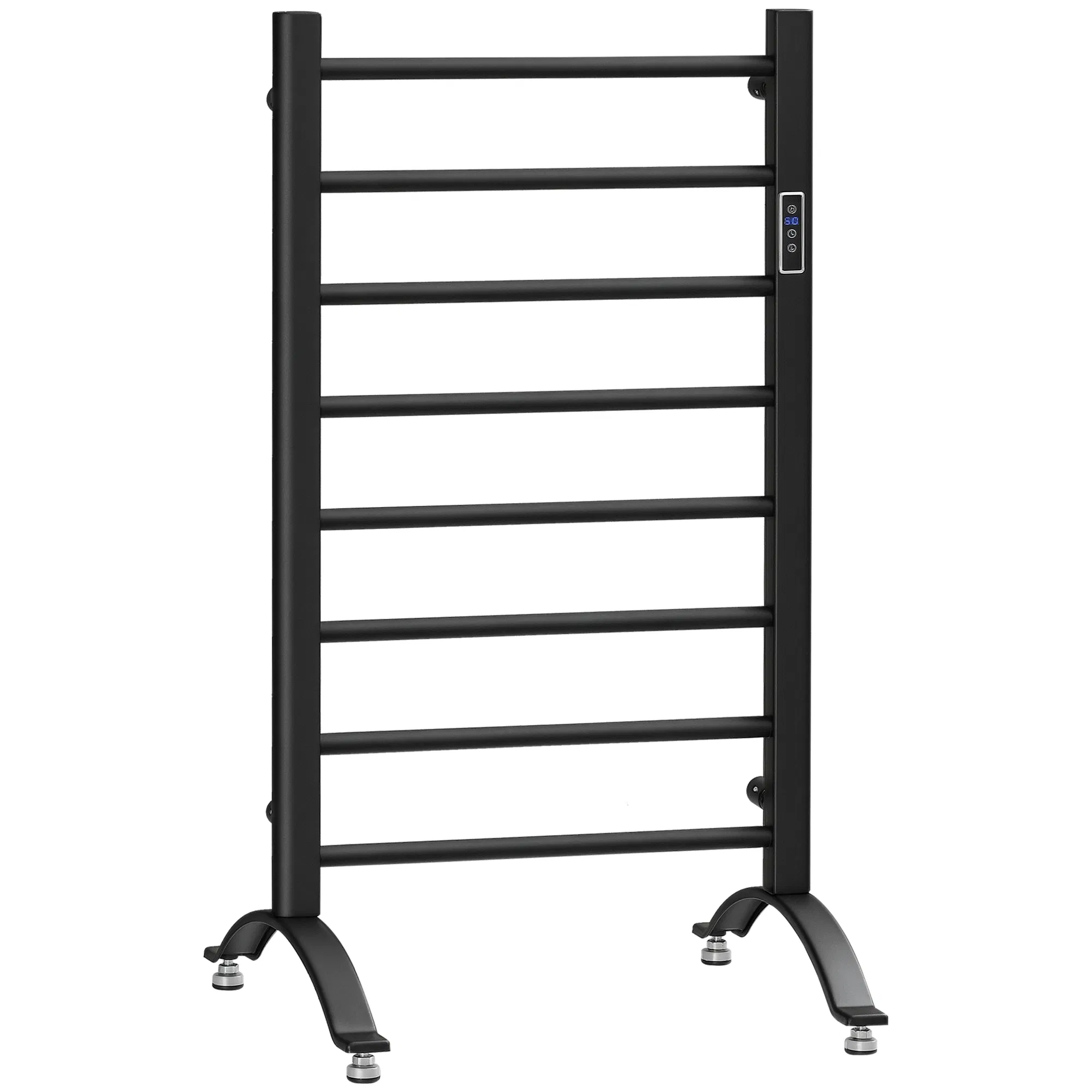 8-Bar Heated Towel Warmer Rack with Built-in Timer and LED Indicators, Wall Mounted & Free Standing Carbon Steel Electric Bar Adjustable Temperature, Black$159.99View on Mallflare
Highlights
- Dry heating element racks (aluminum bars, 8–10 bars) reach operating temperature in 5–15 minutes; liquid-filled or carbon-steel units typically take 20–40 minutes to heat fully.
- Aluminum alloy bars resist rust and are lightweight for wall mounting; carbon steel requires a durable powder-coat finish to prevent corrosion in humid bathrooms.
- IPX4 waterproof rating is the minimum for bathroom safety—it protects against splashing water but not immersion; unrated racks are unsuitable for wet zones.
- Built-in timers (1–24 h) and adjustable thermostats (roughly 30–60 °C / 86–140 °F) are standard on modern electric racks; external timers add bulk and failure points.
Best use cases
- Best fit: A wall-mounted 8-bar aluminum dry-element rack in a small bathroom—fast heat-up, low power draw, and IPX4 rating suit daily towel warming; skip large liquid-filled units that need 30+ minutes.
- Best fit: A 10-bar rack for families or shared bathrooms where multiple towels need warming simultaneously; choose higher bar count over higher wattage per bar for even distribution.
- Wrong fit: Unheated or unrated racks in a wet zone—skip any electric rack without IPX4 or a clearly stated overheat protection circuit, regardless of bar count or finish.
Buying tips
- Match bar count to towel volume: 6–8 bars for 1–2 towels, 10+ bars for 3–4 towels; bar spacing under 10 cm improves drying efficiency by allowing airflow.
- For wall mounting, confirm the rack’s loaded weight against your wall type—drywall needs toggle bolts rated for at least 1.5× the rack’s wet-towel weight; masonry uses anchor sleeves.
- Choose a thermostat range that includes 45–55 °C (113–131 °F) for towel drying; higher settings waste energy and accelerate fabric wear without faster drying.
- Prefer racks with a built-in 1–24 h timer and auto-off; external plug-in timers are a common failure point in humid bathrooms.
Specs
| Heating Type | Dry element / Liquid-filled / Carbon steel |
|---|---|
| Bar Count | 6–12 bars; 8–10 typical |
| IP Rating | IPX4 minimum; IPX5 for wet zones |
| Timer & Thermostat | 1–24 h timer; 30–60 °C adjustable |
Related searches
What to check before buying
- Measure the mounting wall width and height—allow at least 10 cm clearance above and below the rack for airflow and 30 cm from a shower or tub edge.
- Verify your bathroom outlet is GFCI-protected and within cord reach; most electric racks ship with a 1–1.5 m cord and plug into a standard grounded outlet.
- Check the rack’s IP rating and overheat protection circuit—IPX4 minimum for splash zones, and a thermal cut-off is mandatory for unattended timer operation.
- Confirm wall construction (drywall, tile-over-backer, or masonry) and acquire the correct anchors; tile-over-backer requires drilling through tile and sealing with silicone.
FAQ
Data sources: eBay / Amazon listings and product attribute feeds. Updated Nov 22, 2026.
Some links on this page are affiliate links. If you buy after clicking one, we may earn a commission at no extra cost to you. This does not change which products appear here or their order. Affiliate disclosure.