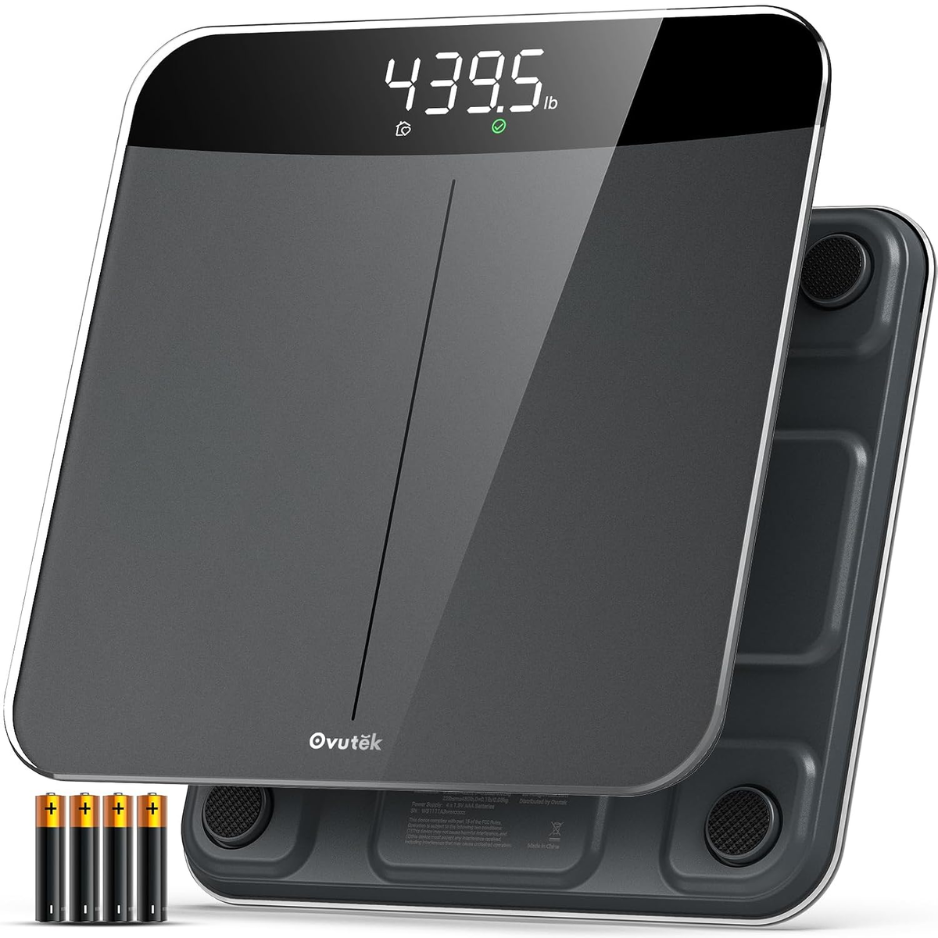

Photos from current listings. Actual item, color, and included accessories may vary.
Bathroom Scale Buying Guide
A bathroom scale is a precision weight-sensing instrument where the core trade-off is between load-cell accuracy and long-term durability versus display convenience and app connectivity. The decisive rule: choose a scale rated to at least 1.5x the heaviest user's weight with a strain-gauge or tempered-glass platform and a consistent 0.1 lb / 0.05 kg resolution; skip scales that only list a maximum weight without specifying sensor type or graduation.
At a glance
- Category
- Bathroom Accessories
- Last updated
- Nov 22, 2026
Current offers
Highlights
- Load-cell count drives accuracy: four-sensor platforms distribute weight evenly and prevent cornering errors; single-sensor scales drift and misread off-center stance.
- Tempered safety glass platforms (6-8 mm thick) resist cracking under rated load; thinner 4-5 mm glass or plastic tops flex and degrade sensor calibration over time.
- Resolution tiers: 0.1 lb / 0.05 kg graduation is standard for body weight; 0.2 lb / 0.1 kg is acceptable for pets and luggage but too coarse for tracking human weight trends.
- Power architecture: USB-C rechargeable or 4x AAA batteries; scales with auto-off and low-battery indicators avoid the dead-scale failure mode common in always-on LED models.
Best use cases
- Best for solo adult weight tracking: pick a 4-sensor tempered-glass scale with 0.1 lb resolution and a backlit LCD; skip Bluetooth models if you do not need trend logging.
- Best for households with elderly or mobility-limited users: choose a scale with extra-large digits, a low-profile 1-inch platform height, and non-slip feet; skip thin glass scales that are hard to step onto.
- Best for baby and pet weighing: use a scale with a tare function and a hold feature that locks the reading after motion stops; skip standard bathroom scales without tare, which cannot subtract container or caregiver weight.
- Wrong fit: high-capacity gym-style scales above 450 lb are unnecessary for typical home use and often trade resolution (0.2 lb+) for range; a standard 400-450 lb scale covers most households.
Buying tips
- Match capacity to user: choose a scale rated 1.5x the heaviest user's weight; a 450 lb rated scale suits users up to 300 lb with margin for dynamic load.
- Verify resolution and units: 0.1 lb / 0.05 kg is the minimum for tracking human weight changes; scales that only show 0.2 lb steps hide real progress.
- Prefer four load cells over two: four-sensor platforms read consistently regardless of foot placement; two-sensor models require centered stance and drift over time.
- Check platform thickness: 6 mm or thicker tempered glass resists flex and sensor stress; below 5 mm, glass may crack under rated load or after years of use.
Specs
| Sensor Type | 4x strain-gauge load cells vs 2x |
|---|---|
| Platform Material | 6-8 mm tempered glass / plastic |
| Weight Resolution | 0.1 lb / 0.05 kg (body); 0.2 lb (pet) |
| Max Capacity | 400-450 lb / 180-200 kg typical |
Related searches
What to check before buying
- Measure your floor space: most bathroom scales are 11-13 inches square; confirm the footprint fits your bathroom tile or mat area without rocking.
- Confirm floor type: place the scale on hard, level flooring (tile, linoleum, concrete); carpet and rugs cause inaccurate readings on any strain-gauge scale.
- Check battery type and availability: USB-C rechargeable or standard AAA; ensure you can source replacements locally without specialty orders.
- Verify unit switching: confirm the scale toggles between lb and kg if your household uses both; scales locked to one unit cause conversion errors.
FAQ
Data sources: eBay / Amazon listings and product attribute feeds. Updated Nov 22, 2026.
Some links on this page are affiliate links. If you buy after clicking one, we may earn a commission at no extra cost to you. This does not change which products appear here or their order. Affiliate disclosure.