
Photos from current listings. Actual item, color, and included accessories may vary.
Bathroom Grab Bar Buying Guide
Bathroom grab bars are load-bearing safety fixtures that prevent falls in wet, slippery environments. The decisive trade-off is between tension-mounted poles (no drilling, relying on ceiling pressure) and permanently anchored wall bars (bolted into studs or blocking, rated for body weight). Buy wall-anchored bars rated 250 lb+ for daily aging-in-place support; choose tension poles only for temporary rentals or ceiling heights where drilling is impossible.
At a glance
- Category
- Bathroom Accessories
- Last updated
- Nov 22, 2026
Current offers
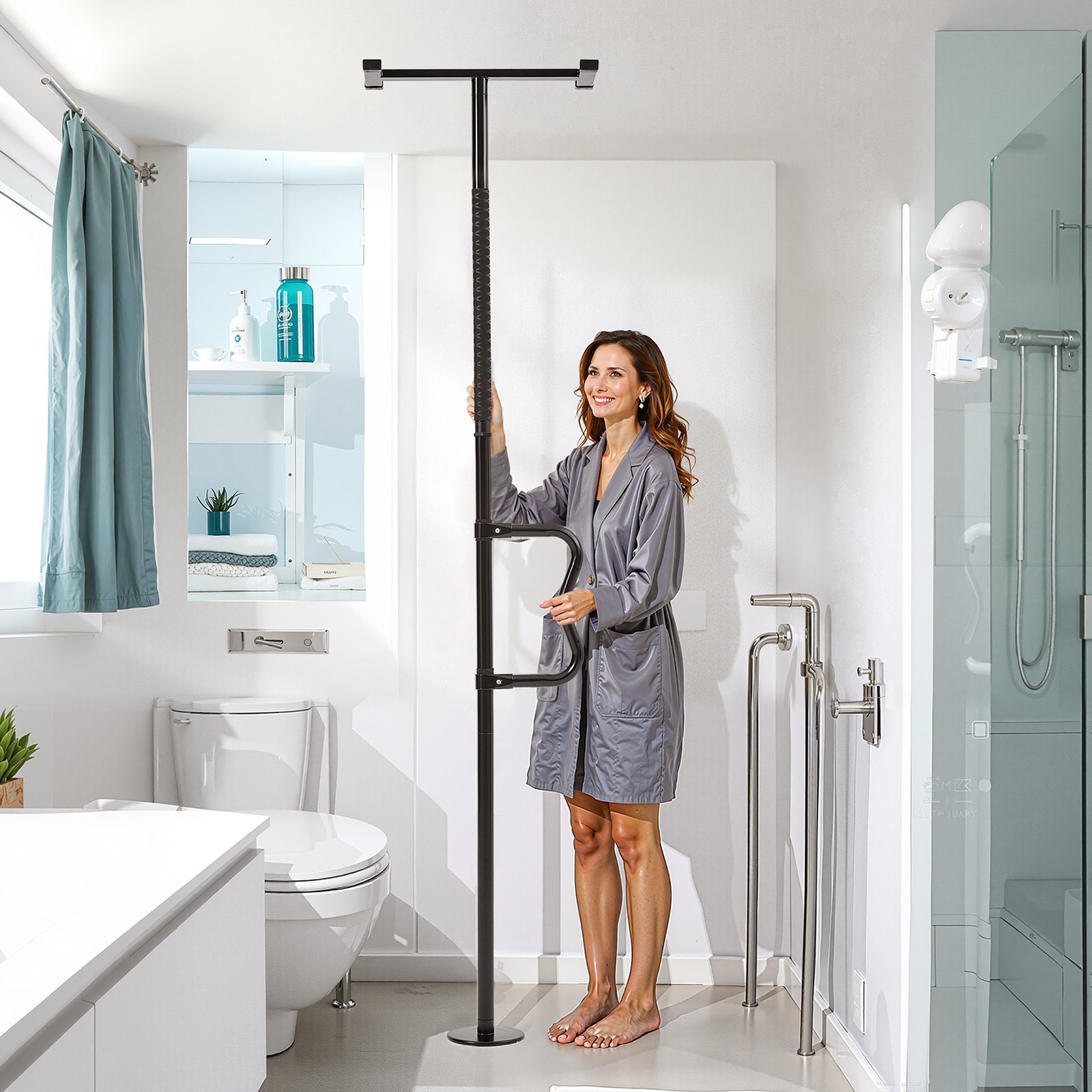 Floor-to-Ceiling Transfer Pole, Tension Mounted Bathroom Grab Bar With Anti-Slip Curve Handle, 300 Lbs Capacity Security For Elderly, Ideal Senior Safety For 7-10 Ft Ceilings, Black$138.99View on Mallflare
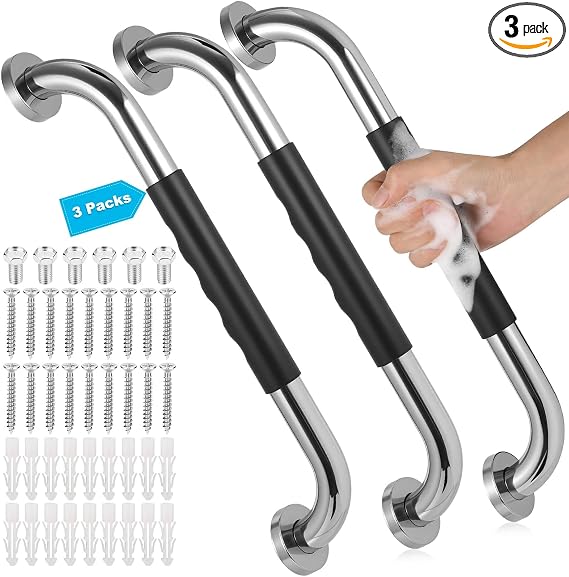 3 Pack 16 Inch Grab Bars For Bathtubs And Showers Bathroom Safety Support Handles$76.99View on Mallflare
Highlights
- Wall grab bars must anchor into wood studs, blocking, or masonry using 2.5–3 inch lag screws; drywall anchors alone fail under 200 lb dynamic load.
- ADA-compliant bars use 1.25–1.5 inch diameter tubing with 1.5 inch wall clearance and 250 lb minimum static load rating.
- Tension-mounted transfer poles rely on ceiling-to-floor compression between 7–10 ft ceilings; they carry 250–300 lb only when properly preloaded and on solid ceilings.
- Knurled or textured grips add wet-hand friction; smooth chrome bars become slippery when soapy, while nylon-coated bars stay grippable but hide scratches less well.
Best use cases
- Best fit: permanent aging-in-place retrofit in a family home — install 16–24 inch wall bars at toilet and shower, anchored to studs with lag screws; skip tension poles.
- Best fit: rental apartment or dorm where drilling is prohibited — use a tension transfer pole with 300 lb rating spanning 7–10 ft ceilings; skip wall bars entirely.
- Wrong fit: using a 16 inch bar as a full-body transfer support at a tub — too short for leverage; specify 24–36 inch bars for lateral pull-up at tub and shower.
- Wrong fit: mounting any grab bar to fiberglass shower surround without behind-wall blocking — the panel will crack; add plywood blocking or use a floor-to-ceiling pole instead.
Buying tips
- Size bars by use: 9–12 inch at toilet (vertical), 16–24 inch at shower entry, 24–36 inch along tub wall; grip diameter 1.25–1.5 inches fits most adult hands.
- Confirm stud spacing: standard 16 inch on-center studs accept 16–24 inch bars directly; 32 inch bars need blocking or a 3-hole flange pattern spanning two studs.
- Match finish to wet exposure: 304 stainless steel or type 316 for coastal/high-humidity; powder-coated steel is budget-grade and chips; plastic bars are not load-rated.
- For tension poles, measure ceiling height first — 7–10 ft is the usable range; below 7 ft the pole bottoms out, above 10 ft extension sections are required.
Specs
| Mount Type | Wall-anchored vs tension pole |
|---|---|
| Load Rating | 250–300 lb static (ADA min 250) |
| Bar Diameter | 1.25–1.5 in (ADA compliant) |
| Bar Lengths | 9–36 in (toilet 9–12, shower 16–36) |
Related searches
What to check before buying
- Measure wall stud locations with a stud finder and confirm 16 or 24 inch on-center spacing before selecting bar length.
- For tension poles, measure floor-to-ceiling height and verify a solid ceiling (drywall over joists, not drop ceiling).
- Check wall substrate: tile over cement board or drywall; masonry requires sleeve anchors, drywall-only requires behind-wall blocking.
- Confirm user weight and transfer method: bariatric or full-standing transfers need 300 lb+ rated bars and 1.5 inch diameter.
FAQ
Data sources: eBay / Amazon listings and product attribute feeds. Updated Nov 22, 2026.
Some links on this page are affiliate links. If you buy after clicking one, we may earn a commission at no extra cost to you. This does not change which products appear here or their order. Affiliate disclosure.