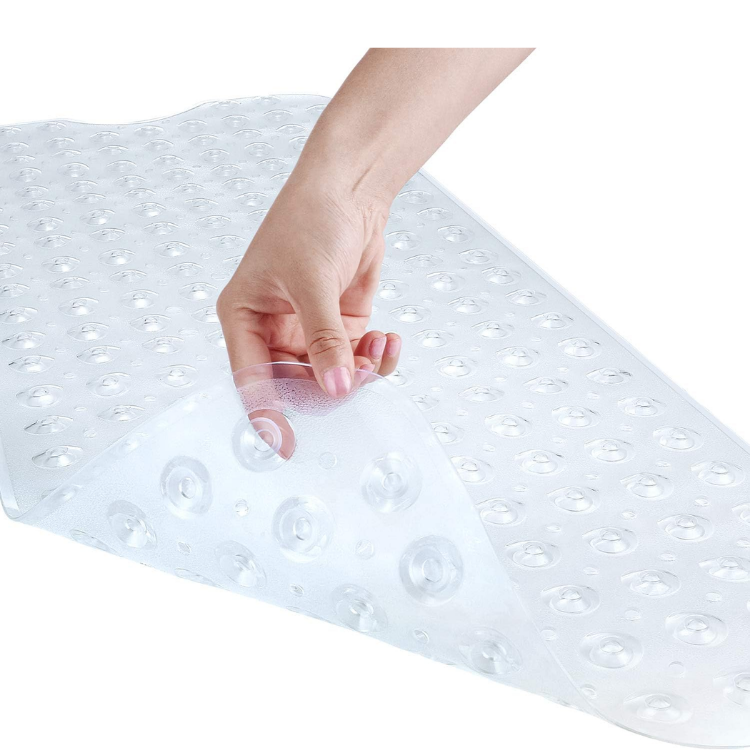

Photos from current listings. Actual item, color, and included accessories may vary.
Bathroom Floor Mat Buying Guide
A bathroom floor mat is a semirigid or fabric mat placed on the floor or tub bottom to prevent slips, absorb water, or add comfort, with the primary trade-off being wet-grip durability vs. quick-drying hygiene. Suction-cup PVC/rubber tub mats win on wet traction but trap grime if not perforated; fabric or diatomaceous mats dry faster but offer less slip resistance. The clear decision rule: pick a perforated suction-cup mat for inside the tub/shower and a quick-dry fabric or stone mat for the dry floor zone—skip any mat without drainage or machine-washability for wet areas.
At a glance
- Category
- Bathroom Accessories
- Last updated
- Nov 22, 2026
Current offers
Highlights
- Suction-cup tub mats use dozens of molded cups on the underside; cup count and mat weight determine hold on smooth acrylic or enamel, not on textured or refinished surfaces.
- Perforated drain holes are the key hygiene feature—without them, soap scum and mildew form under the mat within days, so hole density and pattern matter more than thickness.
- Fabric floor mats rely on GSM and backing: 800–1200 GSM cotton with a non-skid latex or TPR backing balances absorbency with grip; below 600 GSM mats flatten and soak through.
- Diatomaceous-earth and composite stone mats dry in seconds via capillary evaporation, but require a flat, sealed floor and periodic sanding to maintain absorption.
Best use cases
- Inside a bathtub or shower stall: choose a perforated suction-cup mat sized 16–17 in wide for standard tubs and 24–36 in for stall floors; skip fabric mats, which stay soaked and grow mildew.
- Bathroom floor in front of the vanity or tub: pick a machine-washable cotton or microfiber mat with a TPR/latex non-skid backing; skip suction-cup mats, which are unsafe on dry tile because cups don't engage.
- High-humidity or windowless bathrooms: use a diatomaceous stone or quick-dry composite mat that evaporates surface water; skip thick plush mats that hold moisture and need frequent laundering.
Buying tips
- Measure the tub floor at its narrowest point: standard tubs are 24–27 in wide but taper, so a 16–17 in mat fits flat without curling up the sides.
- For shower stalls, match mat dimensions to the drain position—a mat covering the drain slows water flow; choose a perforated mat or one sized to leave the drain clear.
- Check the backing material: TPR (thermoplastic rubber) and latex provide reliable non-skid grip on dry tile; PVC suction cups only hold on smooth, non-textured tub surfaces.
- Prefer machine-washable construction for fabric mats and top-rack dishwasher-safe or hand-washable for stone/composite mats to maintain hygiene without degrading the backing.
Specs
| Mat Type | Suction-cup tub / Fabric floor / Stone |
|---|---|
| Wet-Grip Mechanism | Suction cups vs TPR/latex backing |
| Drainage | Perforated holes vs solid surface |
| Care Method | Machine wash / Hand wash / Sanding |
Related searches
What to check before buying
- Measure your tub or shower floor length and width at the narrowest point; confirm the mat size leaves the drain unobstructed.
- Verify your tub surface is smooth acrylic, enamel, or fiberglass—suction cups will not adhere to textured, refinished, or non-slip factory surfaces.
- Confirm your bathroom floor is flat and sealed if choosing a diatomaceous stone mat; unsealed or uneven tile can cause cracking and poor evaporation.
- Check that the mat's care requirements (machine wash, hand wash, sanding) match your routine, and that a non-skid pad or backing is included for dry-floor mats.
FAQ
Data sources: eBay / Amazon listings and product attribute feeds. Updated Nov 22, 2026.
Some links on this page are affiliate links. If you buy after clicking one, we may earn a commission at no extra cost to you. This does not change which products appear here or their order. Affiliate disclosure.