
Photos from current listings. Actual item, color, and included accessories may vary.
Indoor Outdoor Rug Buying Guide
Indoor-outdoor rugs are all-weather floor coverings built from UV-stabilized synthetic fibers like polypropylene or PET, engineered to resist moisture, fading, and mildew across both covered and open spaces. The core trade-off is face construction—flat-woven low pile drains and dries fast but feels utilitarian, while high-low textured pile adds cushion and pattern depth at the cost of slower drying and more debris trapping. The decision rule is simple: buy solution-dyed or UV-stabilized fiber with a non-rubber backing for true outdoor duty, and treat printed doormat-style mats as entryway accessories, not patio flooring.
At a glance
- Category
- Rugs, Curtains, Blinds & Window Treatments
- Last updated
- Nov 22, 2026
Current offers
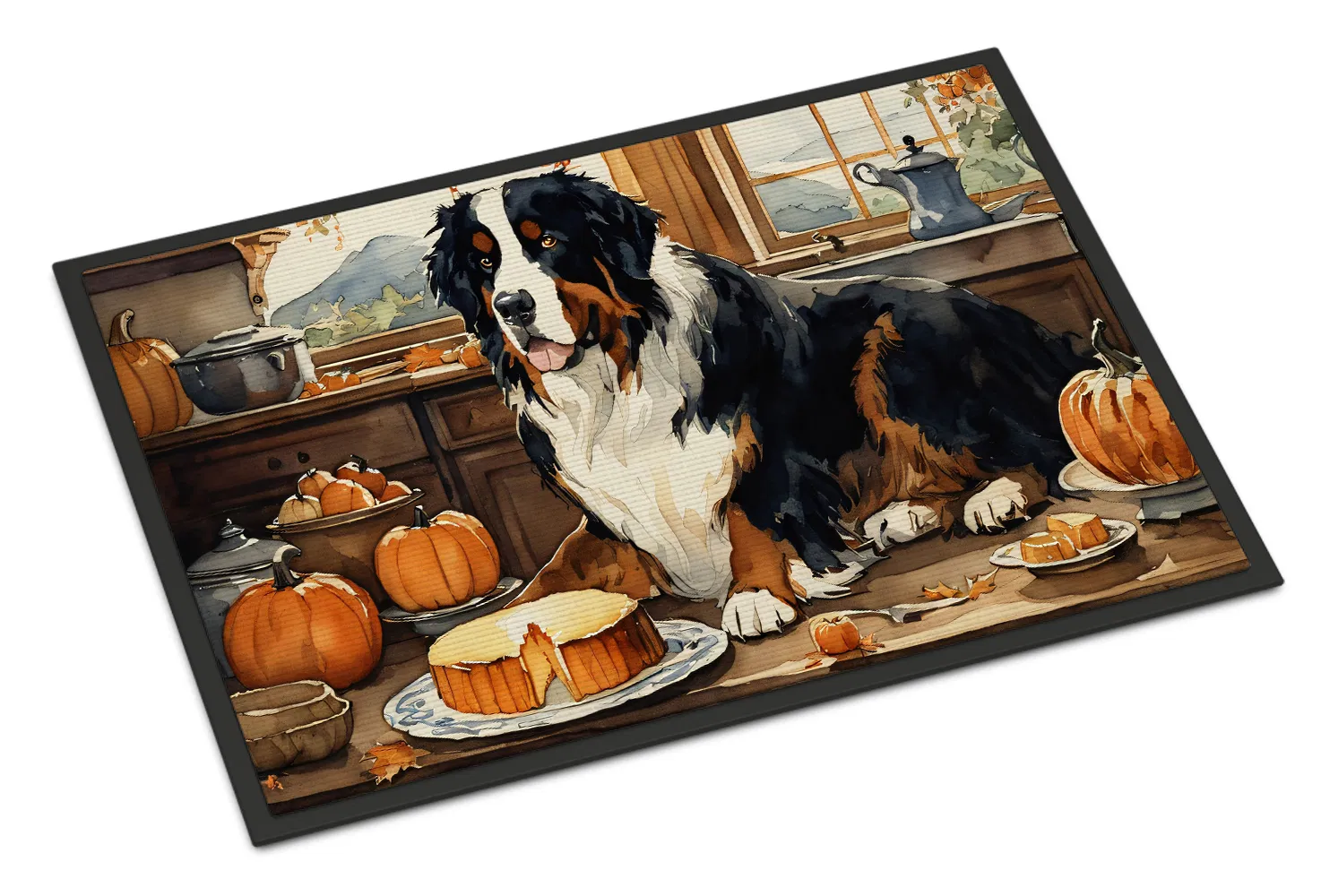 Bernese Mountain Dog Fall Kitchen Pumpkins Doormat Front Door Mat Indoor Outdoor Rugs for Entryway, Non Slip Washable Low Pile, 24H X 36W$50.99View on Mallflare
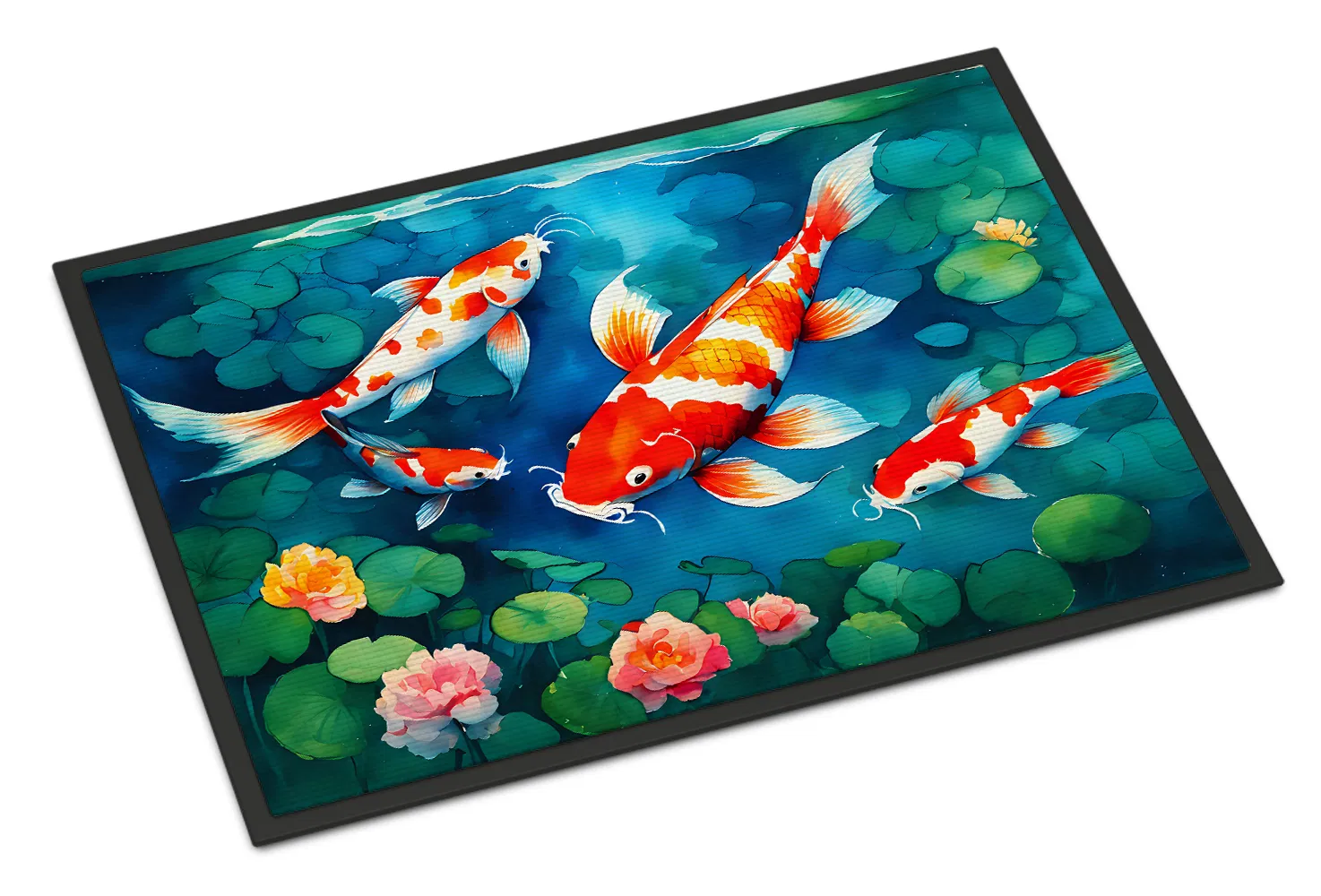 Koi Fish Doormat Front Door Mat Indoor Outdoor Rugs for Entryway, Non Slip Washable Low Pile, 24H X 36W$50.99View on Mallflare
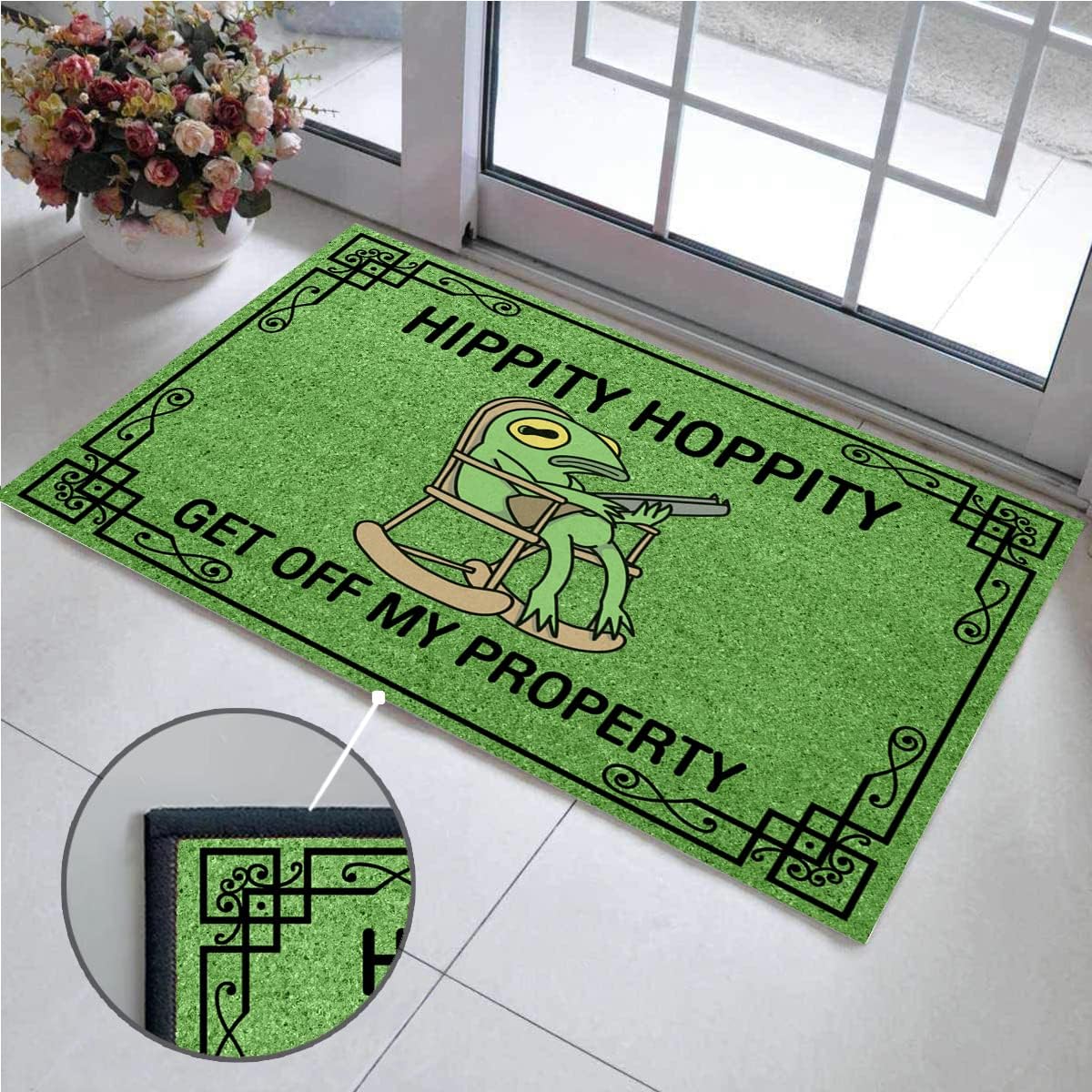 Hippity Hoppity Get Off My Property Funny Frog Doormat, Low Profile Entry Rug For Indoor Outdoor High Traffic Areas$21.99View on Mallflare
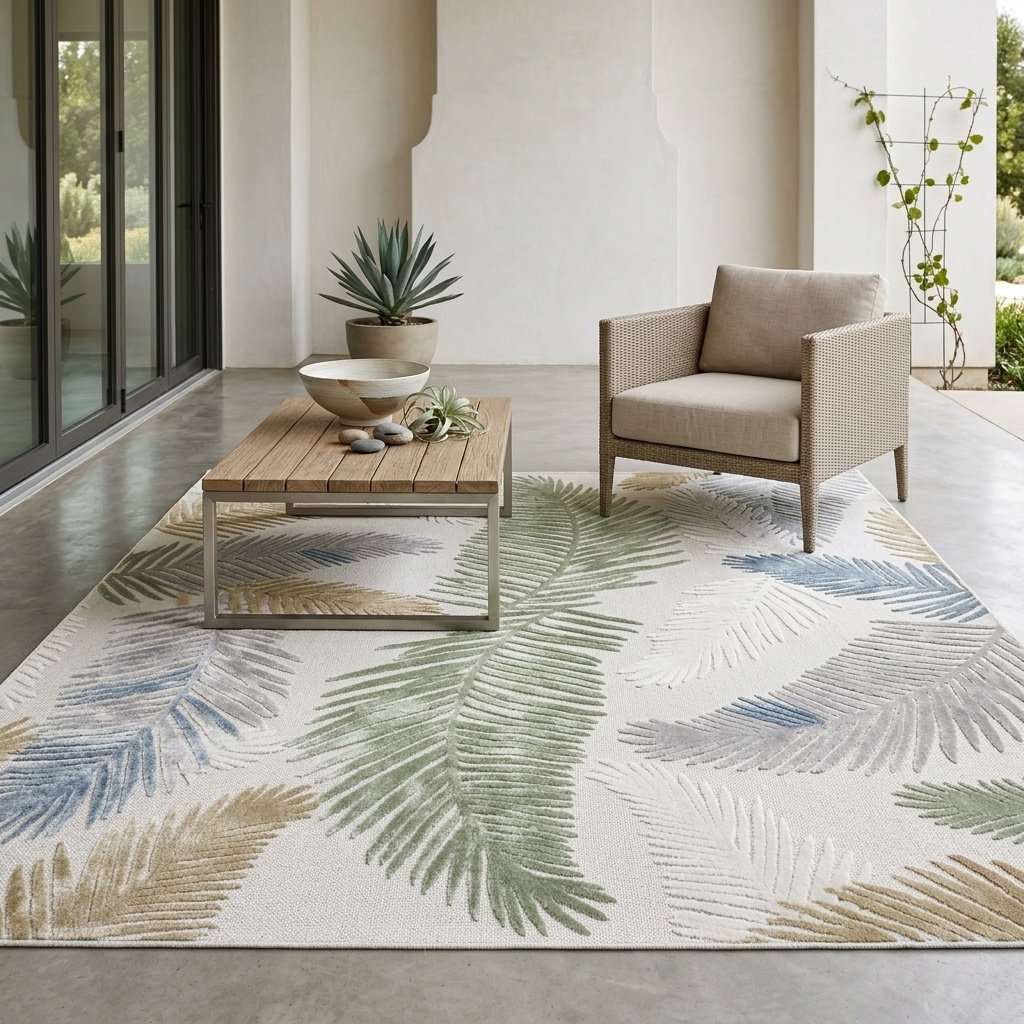 Floral Indoor Outdoor High-Low Pile Area Rug In Cream - Green - Blue - Tan For Patios, Deck, Porch Or Entryway, 5.25X7.55$52.99View on Mallflare
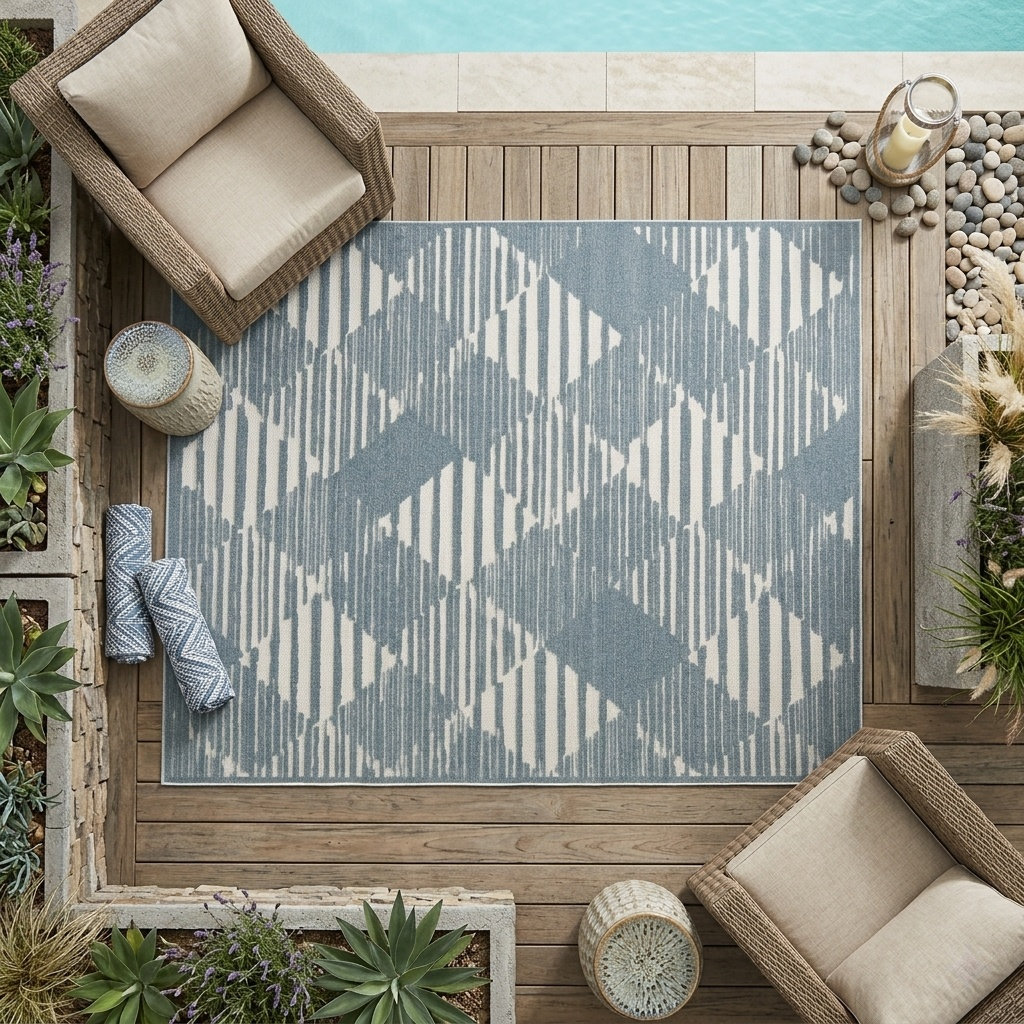 Unfaded Geometric Indoor Outdoor HighLow Pile Area Rug In Blue-Cream For Patios, Deck, Porch Or Entryway5.25X7.55$52.99View on Mallflare
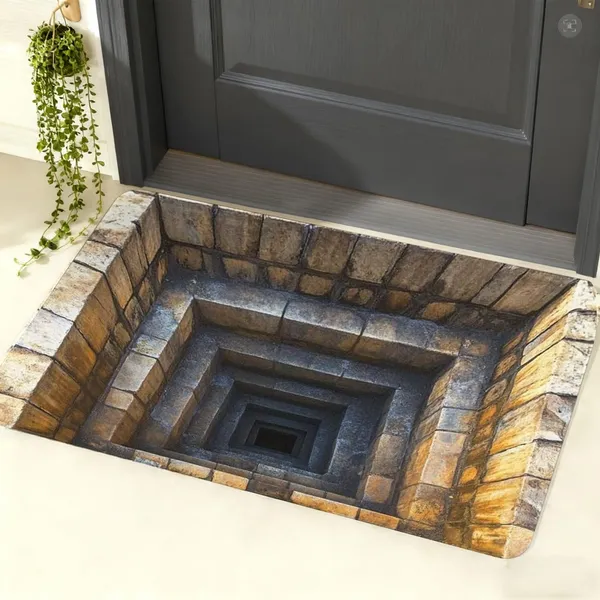 3D Optical Illusion All-Weather Doormat,Front Door Mat Indoor Outdoor Entrance, Easy Clean Patio Porch Entryway Mat, Rug Ground Crack Rug 3D Rugs$53.99View on Mallflare
Highlights
- Polypropylene is the dominant outdoor rug fiber: inherently moisture-resistant, mildew-proof, and colorfast when solution-dyed rather than surface-printed.
- Flat low-pile weaves (under 0.25 in) drain and dry fastest; high-low carved pile offers texture but holds water and grit longer in open rain.
- UV stabilization prevents sun fade; printed graphics on doormats fade faster than solution-dyed yarn because dye penetrates the full fiber.
- Backing matters as much as pile: rubber or woven polypropylene backs resist rot, while latex or jute backings degrade under sustained moisture.
Best use cases
- Covered patio or screened porch: choose a high-low pile area rug in the 5x8 class for comfort and pattern—UV-stabilized fiber handles indirect sun and occasional damp.
- Open deck or poolside: pick a flat low-pile polypropylene rug with drainage-friendly weave and rubber backing; skip plush or high-low pile that traps water.
- Entryway or mudroom: a 24x36 low-pile washable doormat handles high traffic and wet shoes; step up to a 2x3 or 3x5 flatweave for larger transitional zones.
- Skip printed novelty doormats for full-sun patio floors—surface-printed graphics fade and the thin pile offers no comfort under furniture.
Buying tips
- Size by furniture footprint: a patio seating group needs a rug extending at least 6-12 in beyond the front legs; measure the zone before choosing 5x8 vs 8x10.
- Confirm solution-dyed or UV-stabilized labeling—surface-printed color on cheap polypropylene fades within one strong sun season.
- Choose rubber or woven polypropylene backing for wet zones; latex and jute backings trap moisture and degrade, especially on concrete.
- For high-traffic entries, keep pile at 0.25 in or less so doors clear the rug and debris vacuums out instead of matting in.
Specs
| Fiber | UV-stabilized polypropylene / PET |
|---|---|
| Pile Height | Low pile ≤0.25 in vs high-low to 0.5 in |
| Backing | Rubber or woven synthetic; avoid latex/jute |
| Common Sizes | 24x36 doormat; 5x8 / 8x10 area |
Related searches
What to check before buying
- Measure door clearance: low-pile doormats need roughly 0.25-0.5 in clearance so the door does not catch the edge.
- Check the surface: concrete and stone stay damp—pair with a rubber-backed rug; wood decks need a breathable weave to prevent trapped moisture.
- Match size to zone: 24x36 for single doors, 2x3 to 3x5 for entry halls, 5x8 to 8x10 for patio furniture groupings.
- Verify fiber and backing labels state UV-stabilized polypropylene or PET and a non-latex, non-jute backing for exposed sites.
FAQ
Data sources: eBay / Amazon listings and product attribute feeds. Updated Nov 22, 2026.
Some links on this page are affiliate links. If you buy after clicking one, we may earn a commission at no extra cost to you. This does not change which products appear here or their order. Affiliate disclosure.