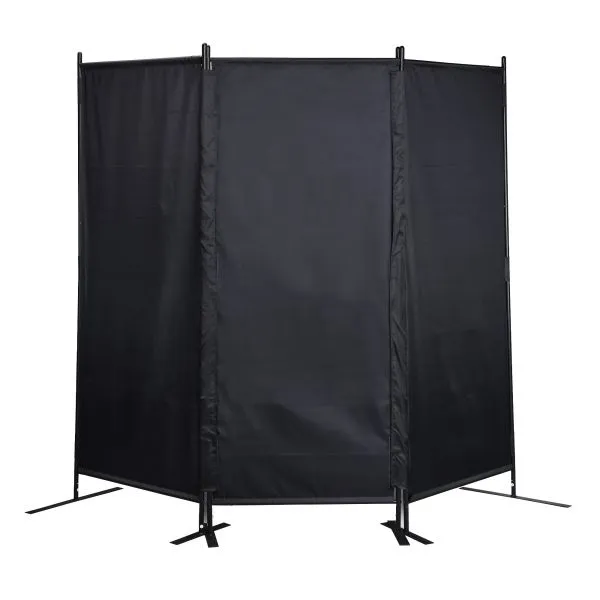

Photos from current listings. Actual item, color, and included accessories may vary.
Portable Wall Divider Buying Guide
Portable wall dividers are freestanding folding screens that create temporary privacy or spatial separation without permanent installation. The primary trade-off is between panel rigidity and portability: heavier frames with dense panels block sightlines and resist tipping, while lightweight folding designs prioritize easy relocation. Choose a divider with a metal or hardwood frame and opaque panels for durability; skip thin PVC or paper-honeycomb cores that warp and tear.
At a glance
- Category
- Mirrors, Wall Decor & Decorative Accessories
- Last updated
- Nov 22, 2026
Current offers
Highlights
- Panel core material determines opacity and durability: solid wood or MDF blocks sight and sound, while fabric or rice-paper inserts offer airflow but little privacy.
- Frame construction matters most: powder-coated steel or aluminum resists bending at hinges, whereas plastic connectors crack under repeated folding.
- Height and panel count define coverage: 6 ft tall models with 3 panels span roughly 4–5 ft when angled, enough to screen a desk or doorway.
- Hinge quality separates durable from disposable: double-action metal hinges allow bidirectional folding and maintain tension after thousands of cycles.
Best use cases
- Best fit: renters needing a temporary bedroom corner or home-office backdrop—pick a 6 ft, 3-panel metal-frame screen with opaque fabric or wood panels.
- Best fit: studio apartments dividing living and sleeping zones—choose a lightweight folding screen under 20 lb that can be moved daily.
- Wrong fit: outdoor patio privacy—skip standard indoor dividers; select weather-treated wood or composite panels rated for UV and moisture.
- Wrong fit: soundproofing a home theater—portable screens do not block low-frequency sound; use mass-loaded vinyl or acoustic panels instead.
Buying tips
- Measure your opening: a 3-panel divider at 6 ft tall covers about 54–60 inches when fully extended; add panels for wider spans.
- Check panel thickness: 0.8–1.2 inch thick frames resist warping; thinner than 0.5 inch panels dent and bow under their own weight.
- Match frame to floor: metal frames with rubber feet grip hardwood; on carpet, choose wider bases or weighted feet to prevent tipping.
- Prefer double-hinged panels: they fold both ways for flexible storage and keep tension; single-hinge models loosen and sag over time.
Specs
| Frame Material | Powder-coated steel / aluminum / hardwood |
|---|---|
| Panel Count | 3-panel (standard) / 4–6 panel (wide) |
| Height Range | 5–6 ft typical; 4 ft for low screens |
| Panel Opacity | Opaque fabric/wood vs translucent paper |
Related searches
What to check before buying
- Confirm ceiling height and door clearance: a 6 ft divider fits most rooms but blocks standard 80-inch doorways when placed in front.
- Check floor surface: hard floors need non-marking rubber pads; carpets require wider feet or anti-slip bases for stability.
- Verify panel opacity: hold a sample against light—if you can see silhouettes, it will not provide visual privacy.
- Plan storage: folded 3-panel screens need about 18–24 inches of closet or wall space; measure before buying.
FAQ
Data sources: eBay / Amazon listings and product attribute feeds. Updated Nov 22, 2026.
Some links on this page are affiliate links. If you buy after clicking one, we may earn a commission at no extra cost to you. This does not change which products appear here or their order. Affiliate disclosure.