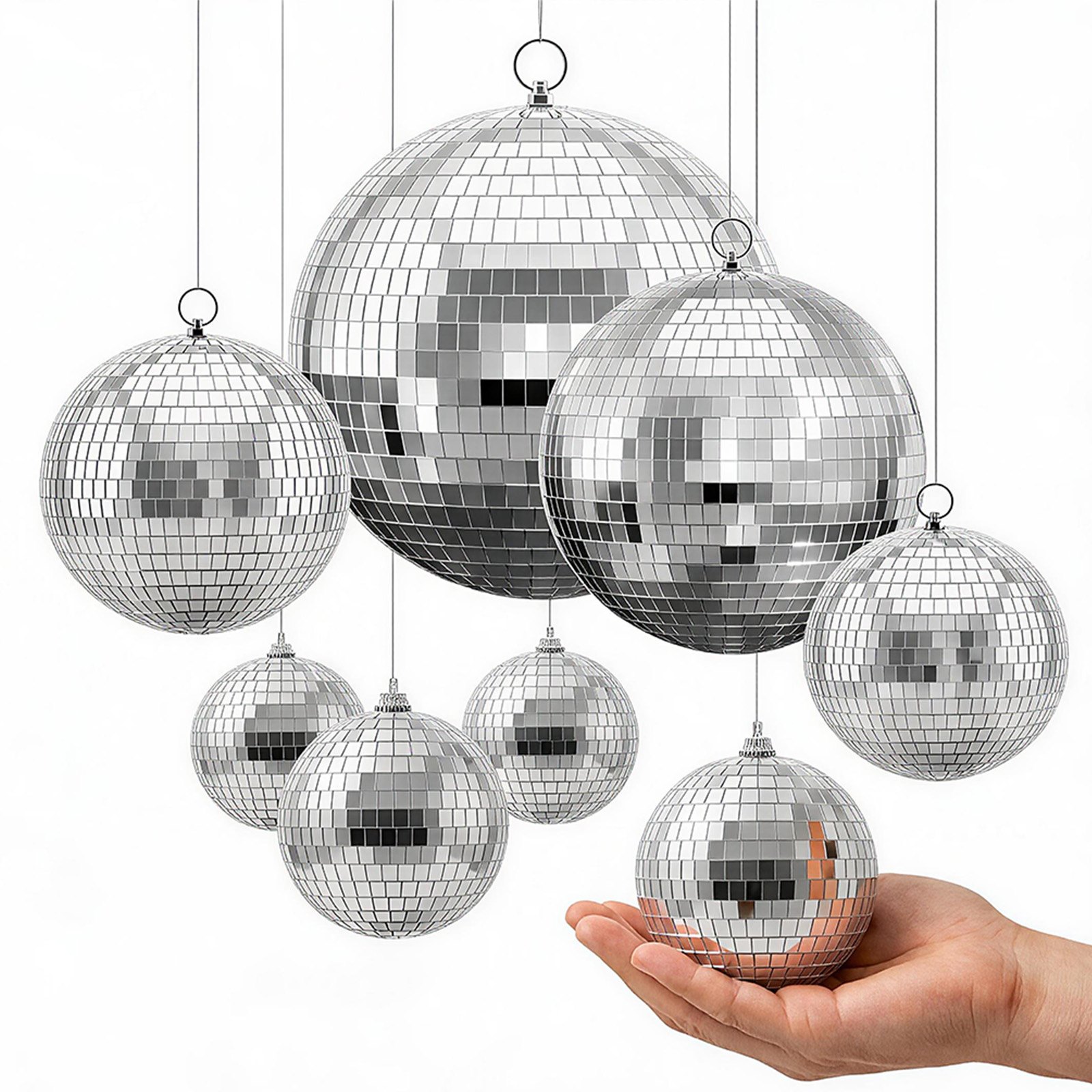

Photos from current listings. Actual item, color, and included accessories may vary.
Mirror Ball Buying Guide
A mirror ball (disco ball) is a faceted sphere that reflects light into moving beams, defined by tile count, tile size, and core construction. The key trade-off is between glass tiles (sharp, durable, heavy) and plastic tiles (light, cheap, softer reflections), with size and motor compatibility driving the final choice. Buy glass for permanent installs and pro lighting; buy plastic for temporary parties and budget decor.
At a glance
- Category
- Mirrors, Wall Decor & Decorative Accessories
- Last updated
- Nov 22, 2026
Current offers
Highlights
- Tile material: real glass mirror tiles give crisp reflections and resist scratching; acrylic/plastic tiles are lighter but warp and dull over time.
- Tile density: smaller tiles (10mm or less) create finer, more numerous light beams; larger tiles (20mm+) produce bolder, fewer reflections suited to small rooms.
- Core construction: solid foam or hollow plastic cores determine weight and mounting safety—foam-core balls hold screws better and spin truer on motors.
- Motor compatibility: pro mirror balls use a center threaded hole or eyelet for motor mounts; decor balls rely on a simple hanging ring and should not be motorized.
Best use cases
- Best fit: a glass-tile ball with a motor mount for permanent home theatres, clubs, or stages—accept the higher weight and cost for sharp, long-lasting beams.
- Best fit: a plastic-tile multi-pack in mixed sizes for one-off parties, weddings, or photo backdrops—light enough for tape or hook mounting and easy to store.
- Wrong fit: hanging a large glass ball from a drywall ceiling anchor or a plastic hook—glass balls over 8 inches need a ceiling joist or rated rigging point.
- Wrong fit: buying a decor ball with only a hanging ring for motorized spinning—the ring is not a balanced spin axis and will wobble or detach.
Buying tips
- Match tile size to throw distance: 10mm tiles read as fine sparkle beyond 10 feet; 20mm+ tiles stay visible in small rooms and low light.
- Size rule: 4–6 inch balls suit tabletop and small-room decor; 8 inch suits home theatres; 12 inch and up are stage/club fixtures needing rigging.
- For spinning, choose a ball with a center-mounted threaded insert or motor-compatible eyelet, and pair it with a motor rated above the ball's weight.
- Glass tiles outperform plastic for reflection quality and lifespan; plastic wins only when weight, shatter risk, or budget are the priority.
Specs
| Tile Material | Glass mirror vs acrylic/plastic |
|---|---|
| Tile Size | 10mm fine / 20mm+ bold |
| Mount Type | Hanging ring vs motor insert |
| Ball Diameter | 4–6 in decor / 8–12 in stage |
Related searches
What to check before buying
- Measure ceiling height and mounting point: a 12-inch glass ball needs roughly 10–15 lb of support from a joist or rated anchor, not drywall plugs.
- Confirm the ball has a hanging ring or eyelet plus, for motor use, a centered mount—decor-only rings are not balanced for rotation.
- Check tile finish before install: glass tiles ship with a protective film that must be peeled; plastic tiles may arrive with mold-release residue needing a wipe.
- For outdoor or humid rooms, choose plastic or sealed glass tiles—unsealed mirrors can haze at the edges in damp air.
FAQ
Data sources: eBay / Amazon listings and product attribute feeds. Updated Nov 22, 2026.
Some links on this page are affiliate links. If you buy after clicking one, we may earn a commission at no extra cost to you. This does not change which products appear here or their order. Affiliate disclosure.