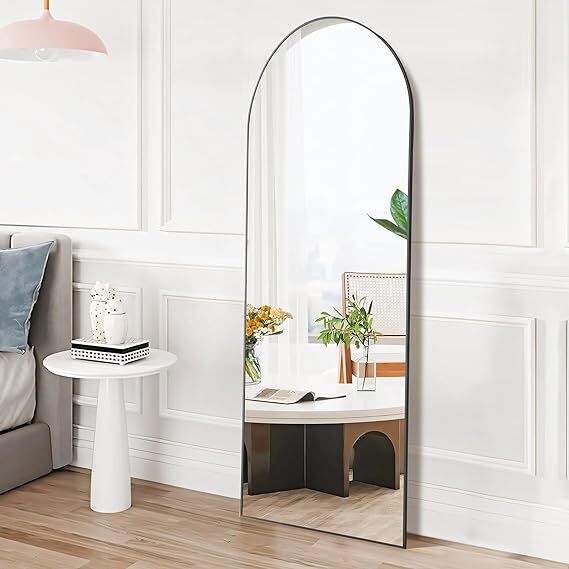

Photos from current listings. Actual item, color, and included accessories may vary.
Large Floor Mirror Buying Guide
A large floor mirror is a full-length mirror (typically 59–79 inches tall) designed to stand on the floor or lean against a wall, serving as both a functional dressing mirror and a major decor piece. The primary trade-off is between alloy or wood frames with real glass and lightweight plastic or acrylic frames that distort reflections and tip easily. The decision rule: pick a mirror with a metal or solid-wood frame, a safety-backed glass panel, and a base width of at least 16 inches—skip anything under 12 inches wide or made of acrylic if you want a stable, distortion-free mirror.
At a glance
- Category
- Mirrors, Wall Decor & Decorative Accessories
- Last updated
- Nov 22, 2026
Current offers
Highlights
- Frame material determines stability: aluminum alloy and steel frames resist warping and support taller heights; MDF and plastic frames are lighter but prone to bowing over 65 inches.
- Glass quality: 4mm+ silver-backed glass gives true-color reflection; 3mm or acrylic mirrors visibly distort and scratch within months.
- Base footprint: a stand or easel base at least 16 inches wide prevents tipping; narrower bases require wall anchoring for heights above 65 inches.
- Safety backing: a shatter-resistant film or tempered glass layer keeps shards contained if the mirror breaks—critical for homes with kids or pets.
Best use cases
- Best fit: bedroom dressing corner—choose a 59–65 inch leaning mirror with 4mm glass and a 16-inch base for full-body viewing without wall mounting.
- Best fit: living room decor statement—pick a 71–79 inch arched or rectangular floor mirror with a brushed metal frame and anti-tip wall strap for a leaning look.
- Wrong fit: small hallway or entryway—a floor mirror wider than 24 inches or taller than 71 inches will crowd the space; use a 59-inch leaner or a wall-mounted full-length mirror instead.
- Wrong fit: bathroom or humid area—standard MDF and non-sealed alloy frames swell or corrode; specify a sealed metal frame or skip floor mirrors entirely.
Buying tips
- Height rule: mirror top should sit at or above your eye level—59 inches suits most adults; 65–71 inches is safer for taller users or heels.
- Lean angle: a 5–7 degree lean is stable and gives the most flattering full-length view; anything steeper needs a wall strap or floor stand.
- Base width math: base should be at least 1/3 of mirror height (e.g., 20-inch base for a 65-inch mirror) to resist tipping without anchoring.
- Frame grade: choose 1.2mm+ aluminum alloy or solid rubberwood over particleboard; hollow plastic frames crack at mounting points and cannot hold glass safely.
Specs
| Frame Material | Aluminum alloy vs MDF vs solid wood |
|---|---|
| Glass Grade | 4mm silver-backed vs 3mm vs acrylic |
| Height Range | 59–79 in (full-length standard) |
| Base Width | 16 in+ stand vs 12 in narrow leaner |
Related searches
What to check before buying
- Measure floor-to-ceiling height and subtract 6 inches—your mirror height should not exceed this clearance for leaning placement.
- Confirm delivery route: a 59-inch mirror box typically exceeds 60 inches, so verify elevator, stairwell, and door widths before ordering.
- Check floor type: on carpet, choose a wider base or wall-anchored model; on tile or wood, felt pads prevent frame scratching.
- Verify hanging hardware if wall-mounted: French cleat or Z-bar rated for at least 1.5x the mirror’s weight, and locate wall studs or use drywall anchors rated for the load.
FAQ
Data sources: eBay / Amazon listings and product attribute feeds. Updated Nov 22, 2026.
Some links on this page are affiliate links. If you buy after clicking one, we may earn a commission at no extra cost to you. This does not change which products appear here or their order. Affiliate disclosure.