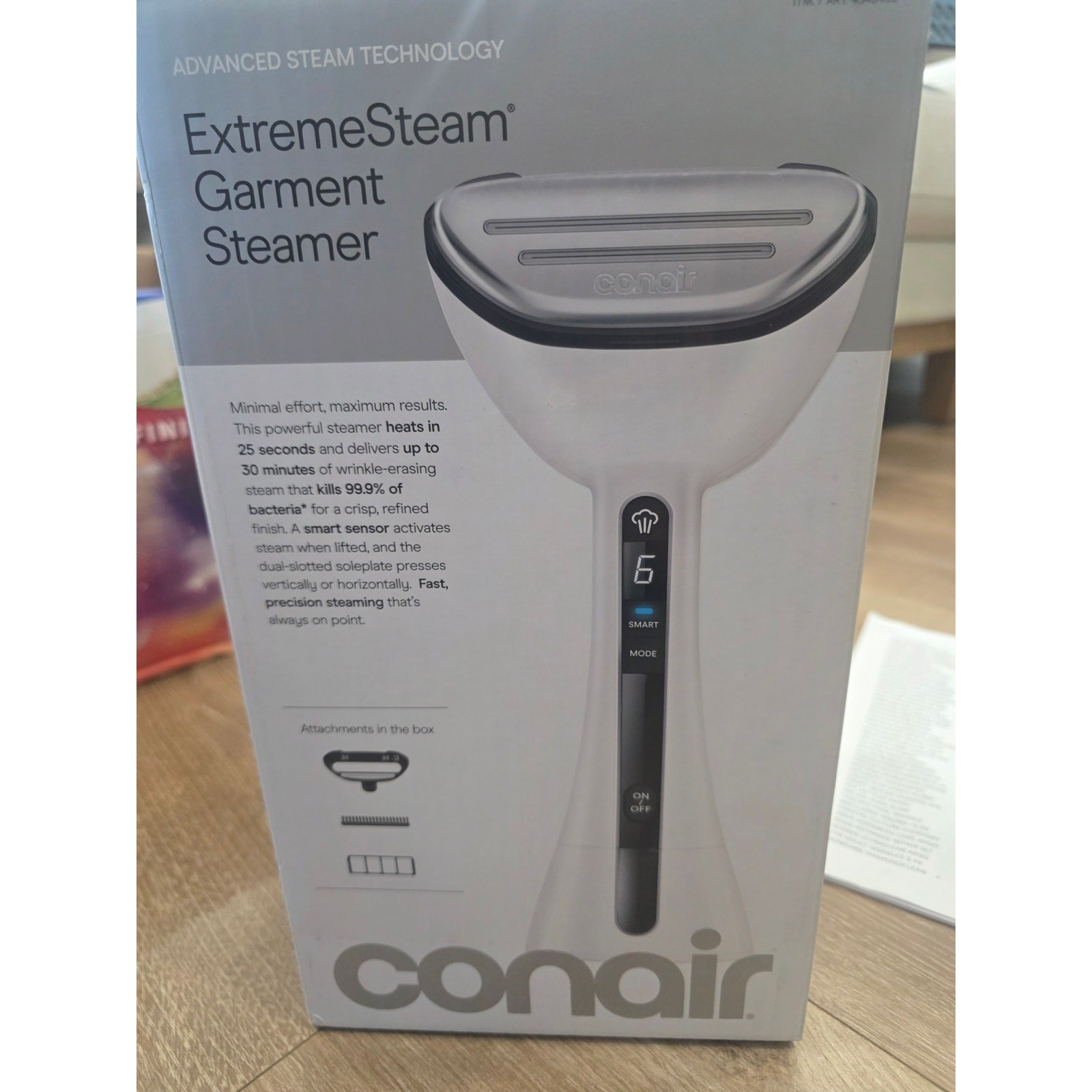

Photos from current listings. Actual item, color, and included accessories may vary.
Conair ExtremeSteam Garment Steamer Buying Guide
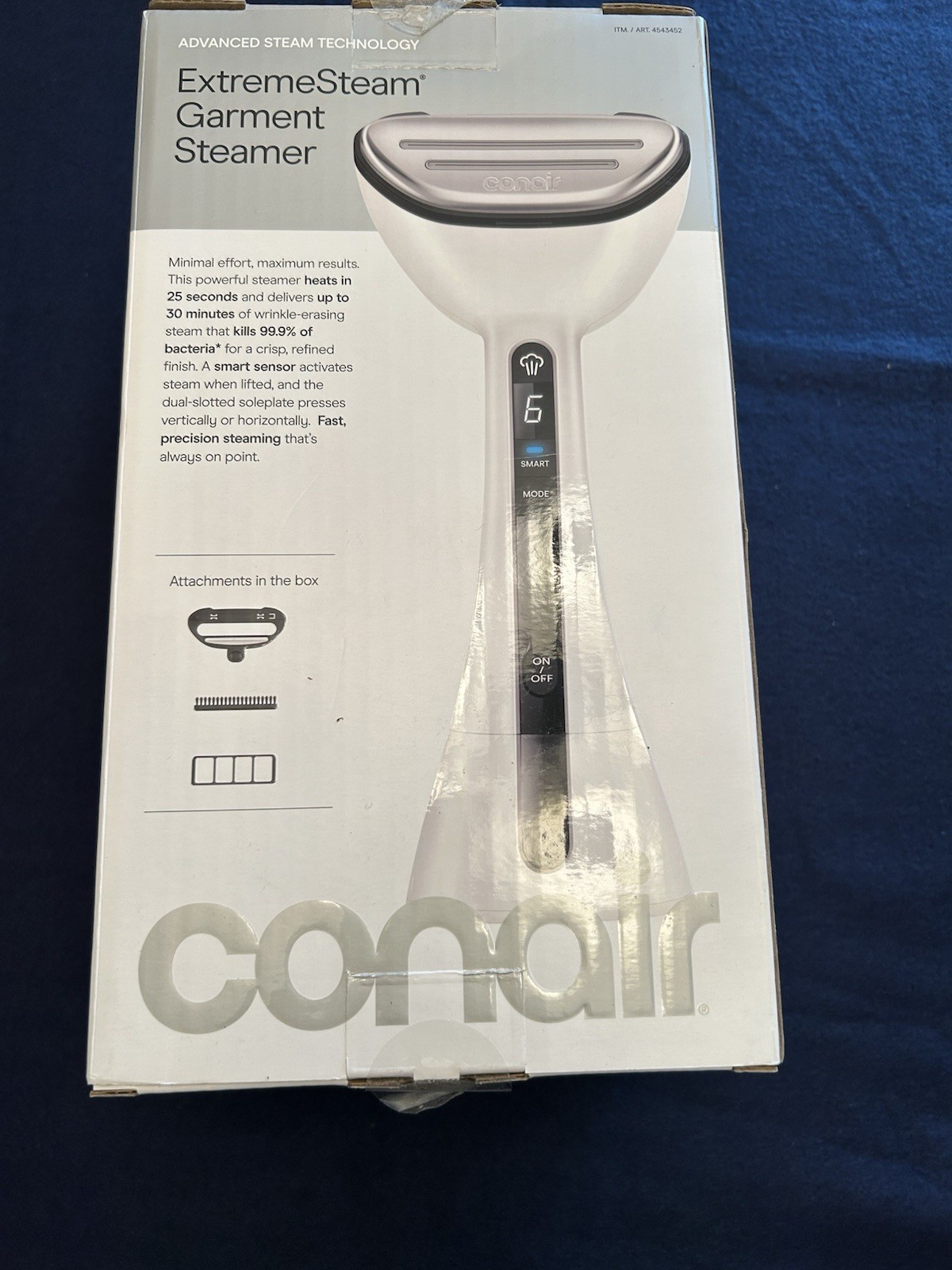
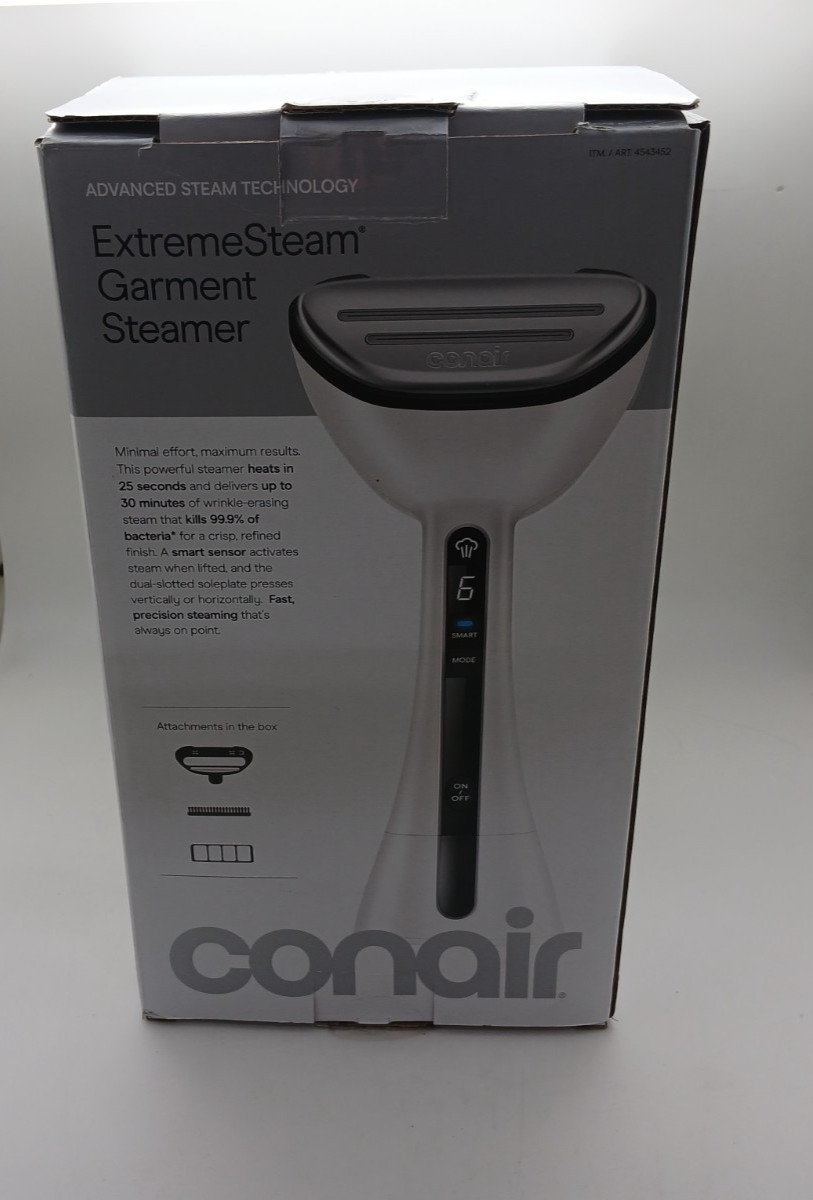
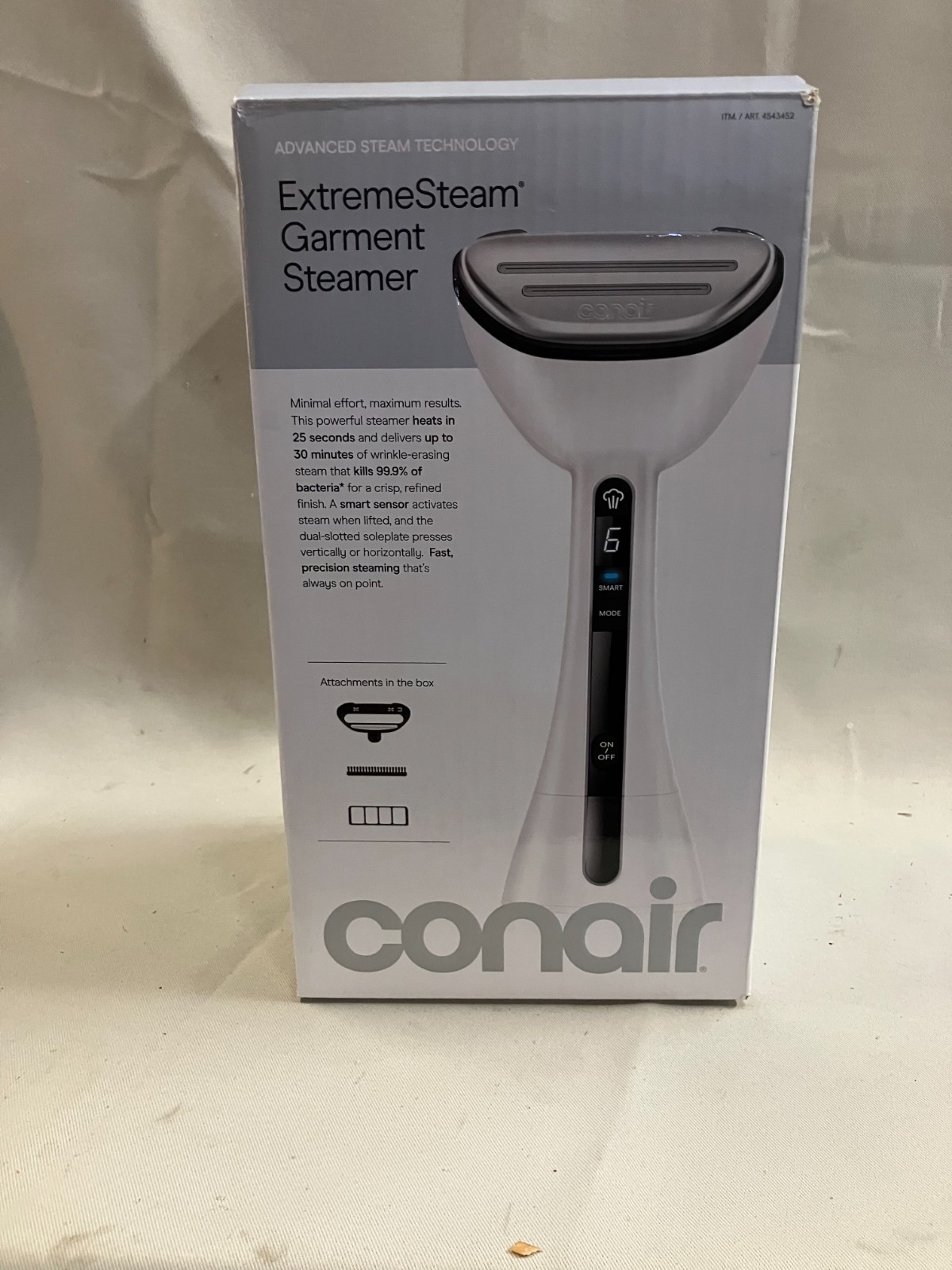
The Conair ExtremeSteam is a handheld garment steamer built for quick wrinkle release on hanging fabrics, using a heated soleplate and continuous steam rather than direct ironing contact. The primary trade-off is steam output and heat-up speed versus water tank capacity and continuous runtime—handheld units trade shorter sessions for portability. The decision rule: buy a handheld steamer only if you need quick touch-ups on a few garments; choose a tank-style or professional steamer if you regularly steam multiple items or heavy fabrics in one session.
At a glance
- Category
- Laundry & Garment Care
- Status
- Listings available
- Last updated
- Nov 22, 2026
Current offers
Highlights
- Handheld form factor with a heated ceramic soleplate that combines light pressing with steam for better crease control than steam-only wands
- Continuous steam trigger with a removable water tank typically in the 200–300 ml range, yielding roughly 8–12 minutes of continuous steam per fill
- Heat-up time in the 45–60 second range, with an auto-shutoff safety feature when the unit runs dry or overheats
- Steam output typically rated around 20–30 g/min for handheld Conair models, suitable for cottons and synthetics but slower on dense linens and denim
Best use cases
- Best fit: quick daily touch-ups on dress shirts, blouses, and light sweaters hanging on a door or rod—pick a handheld like the ExtremeSteam for speed and storage ease.
- Best fit: travel and small apartments where a full ironing board is impractical—choose a compact handheld with a removable tank and a long enough cord (8–9 ft) to reach a hanging rod.
- Wrong fit: steaming heavy drapes, upholstery, or a full week's wardrobe in one sitting—skip handhelds and choose a tank-style steamer with 1.5 L+ capacity and 30+ minutes of runtime.
- Wrong fit: pressing sharp creases into trousers or dress shirts—a handheld steamer relaxes wrinkles but cannot set a crisp crease; use a steam iron with a soleplate for that.
Buying tips
- Match tank capacity to session length: 200–300 ml handheld tanks handle 2–4 garments per fill; if you routinely steam 5+ items, step up to a 1 L+ tank-style unit.
- Check the soleplate material: ceramic or nonstick-coated soleplates glide better and resist mineral buildup versus bare plastic, which can snag delicate fabrics.
- Prioritize a removable water tank and a 360-degree swivel cord or 8+ ft cord—refilling mid-session and cord tangle are the two most common handheld steamer frustrations.
- Use distilled water if your tap water is hard (above ~120 mg/L calcium carbonate); mineral scale is the leading cause of reduced steam output and clogged nozzles in handheld units.
Specs
| Steamer Type | Handheld vs tank-style |
|---|---|
| Tank Capacity | 200–300 ml handheld / 1 L+ tank |
| Steam Output | 20–30 g/min handheld |
| Heat-Up Time | 45–60 sec handheld |
Alternatives to compare
Related searches
What to check before buying
- Measure your hanging space: the steamer head plus a garment on a hanger needs roughly 12–18 inches of clearance below the rod for effective downward steaming.
- Confirm your outlet voltage and plug type match the model—Conair sells 120 V US models and 220–240 V export versions; a mismatched unit will underperform or require a converter.
- Check fabric care labels: most washable cottons, synthetics, and blends are steamer-safe, but acetate, rayon, and some delicates can water-spot—test on an inside seam first.
- Plan for a heat-safe resting spot and a lint-free cloth for wiping the soleplate; handheld steamers should never be stored full of water between uses.
FAQ
Data sources: eBay / Amazon listings and product attribute feeds. Updated Nov 22, 2026.
Some links on this page are affiliate links. If you buy after clicking one, we may earn a commission at no extra cost to you. This does not change which products appear here or their order. Affiliate disclosure.