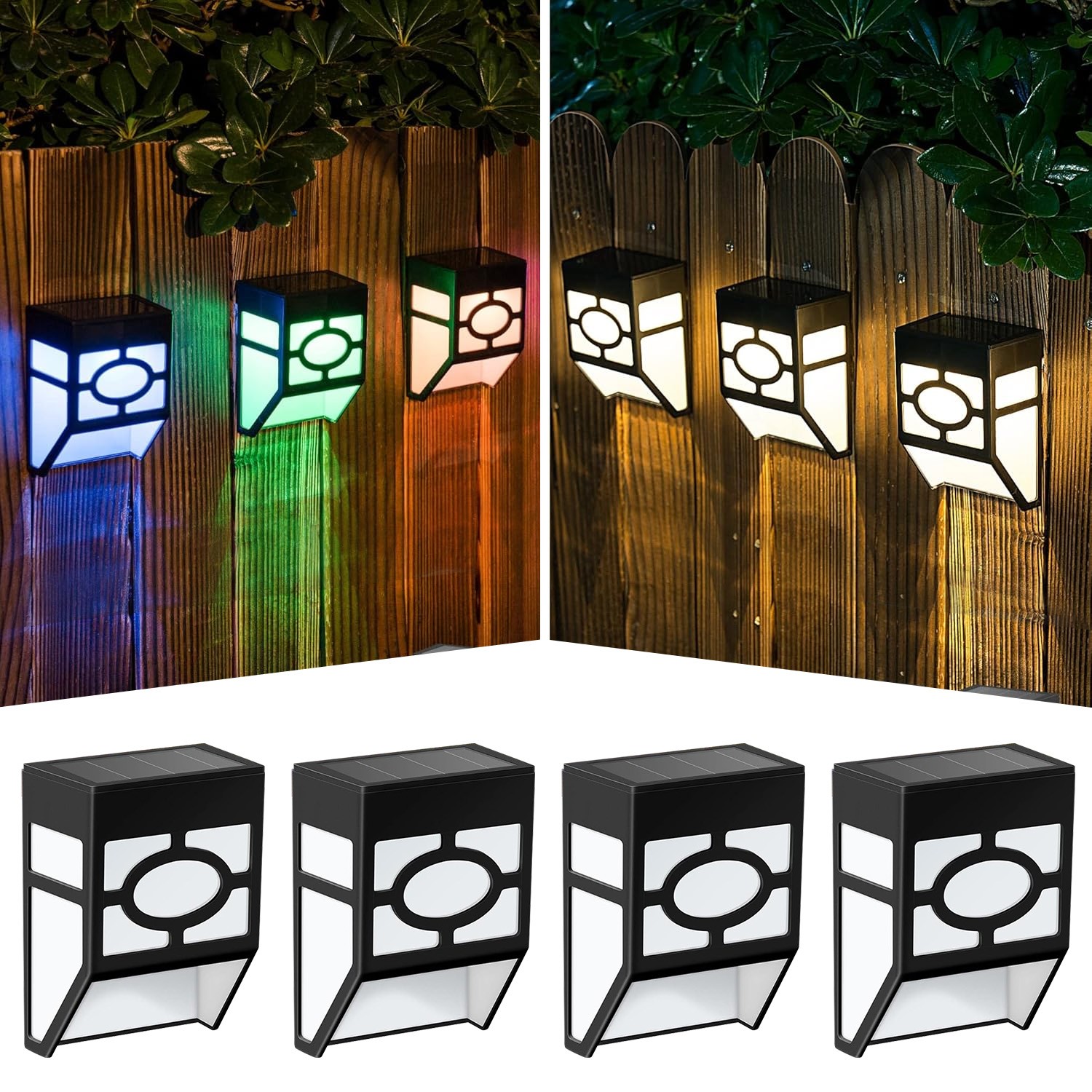

Photos from current listings. Actual item, color, and included accessories may vary.
Solar Outdoor Wall Light Buying Guide
Solar outdoor wall lights are self-contained fixtures combining a PV panel, rechargeable cell, motion or dusk sensor, and LED emitter—no trenching or wiring required. The core trade-off is between integrated compact units with small panels and split-panel designs that harvest more sun but need cable routing. Buy only fixtures rated IP65 or higher with monocrystalline panels and LiFePO4 cells; sealed, split-panel models with replaceable batteries are the durable choice, while glued-shut units with amorphous panels are disposable.
At a glance
- Category
- Lamps & Indoor Lighting
- Last updated
- Nov 22, 2026
Current offers
Highlights
- Panel type decides daily yield: monocrystalline cells convert 18-22% vs 6-10% for amorphous, so a monocrystalline panel half the size can match output.
- Battery chemistry governs lifespan: LiFePO4 delivers 2000+ cycles (5-8 years) vs 300-500 for Li-ion, and sealed lead-acid fades within 2-3 seasons.
- Ingress protection must be IP65 minimum for rain jets; IP44 only resists splashes and will corrode at the battery door within a year.
- Motion sensor quality separates tiers: dual PIR with 3-8 m range and adjustable timeout/lux thresholds beats fixed 2 m sensors that false-trigger on pets.
Best use cases
- Best fit: a fence post or shed wall with 6+ hours of direct sun—choose a split-panel model if the wall itself is shaded, since the panel can be angled toward the sun on a 1-3 m cable.
- Best fit: a front door or garage side return where you want motion-triggered light—pick a dual-PIR unit with 120° detection and 8-10 m range, not a 2 m single-sensor toy.
- Wrong fit: a heavily shaded north-facing wall or deep porch—no solar wall light will keep up; use a wired fixture or a model with a detachable panel on an extension cable.
- Wrong fit: a coastal/salt-spray location unless the housing is UV-stabilized ABS or die-cast aluminum with stainless screws—cheap polypropylene and plain steel screws seize and craze.
Buying tips
- Size the panel to the load: a 2 W LED running 6 hours needs roughly 12 Wh, so pair it with a 6-10 W panel and a 3.7 V 2000-3000 mAh cell in average sun.
- Demand a replaceable battery door and standard cell size (18650/26650 or AA NiMH); potted, glued-shut fixtures are landfill once the cell fades.
- For fence/deck packs, check per-unit lumens rather than pack count—many 4-packs deliver 20-40 lm each, fine for accent, not for safety lighting.
- Match color temperature to purpose: 3000-4000 K for welcoming entry light, 6000-6500 K only for security zones where cool white improves perceived brightness.
Specs
| Panel Type | Monocrystalline 18-22% vs Amorphous 6-10% |
|---|---|
| Battery Chemistry | LiFePO4 2000+ cycles vs Li-ion 300-500 |
| Ingress Protection | IP65 minimum / IP44 splash-only |
| Motion Detection | Dual PIR 120° / 3-8 m range |
Related searches
What to check before buying
- Measure the mounting surface and confirm screw/ anchor type (wood fence vs brick/stucco vs vinyl siding) before choosing a bracket style.
- Verify the panel's daily sun window—aim for 4-6 hours of unobstructed light; if not available, plan a split-panel model with a cable run.
- Check the fixture's dimensions against the wall and door trim so the panel does not overhang or shadow the sensor.
- Confirm the operating temperature range covers your climate's winter lows; LiFePO4 tolerates -20°C, while standard Li-ion loses capacity below 0°C.
FAQ
Data sources: eBay / Amazon listings and product attribute feeds. Updated Nov 22, 2026.
Some links on this page are affiliate links. If you buy after clicking one, we may earn a commission at no extra cost to you. This does not change which products appear here or their order. Affiliate disclosure.