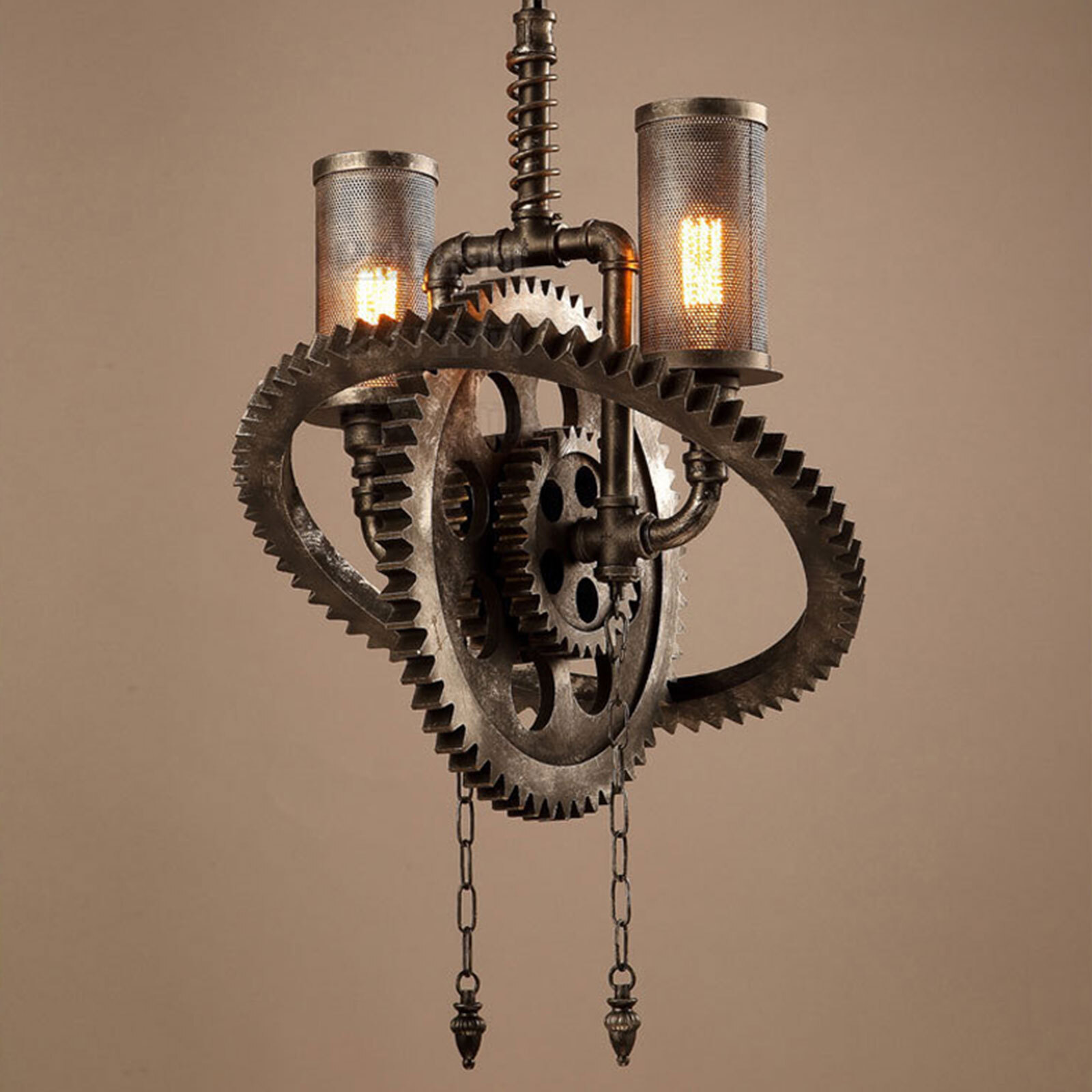

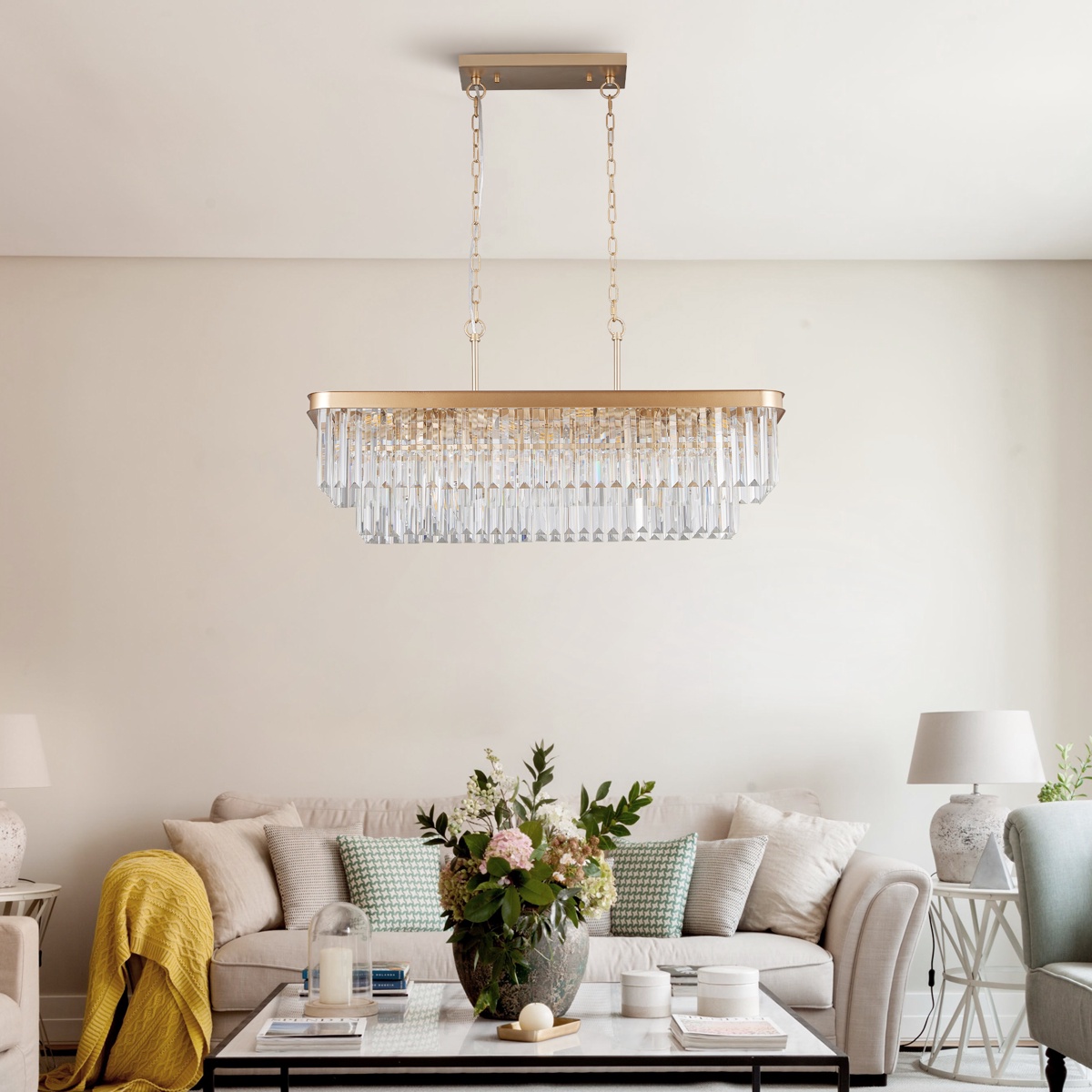
Photos from current listings. Actual item, color, and included accessories may vary.
Industrial Ceiling Light Buying Guide
Industrial ceiling lights span rugged flush-mount fixtures, warehouse-style pendants, and vintage-inspired chandeliers that blend exposed hardware with functional illumination. The core trade-off is between open-frame industrial aesthetics and sealed, code-compliant construction—open cages vent heat but collect dust, while sealed enclosures simplify cleaning and damp-location use. Choose based on ceiling height, clearance, and whether the fixture must meet wet/damp or commercial electrical standards rather than looks alone.
At a glance
- Category
- Lamps & Indoor Lighting
- Last updated
- Nov 22, 2026
Current offers
Highlights
- Flush-mount industrial fixtures sit 6–10 in from the ceiling; pendants typically hang 18–36 in above counters or tables, and chandeliers need 30–36 in clearance above surfaces.
- UL/ETL listing and damp/wet-location rating are the key safety differentiators; unlisted decorative cages are unsuitable for bathrooms, porches, or commercial spaces.
- Metal gauge matters: 1.5–2 mm (16–14 ga) steel frames resist sag and wobble, while thin 0.8 mm stamped housings dent and strip at mounting screws.
- Socket and bulb format drives output: E26 medium-base fixtures accept standard LED bulbs up to ~100 W equivalent, while integrated-LED models lock in lumens and color temperature.
Best use cases
- Best fit: a flush-mount cage or drum fixture for 8–9 ft residential ceilings in kitchens, hallways, and bedrooms—skip long pendants that would hang below head height.
- Best fit: a warehouse-style pendant or linear fixture for 10–12 ft ceilings, lofts, and garages—skip flush mounts that waste vertical space and cast uneven light.
- Best fit: a damp-rated sealed fixture for bathrooms, covered porches, and laundry rooms—skip open-frame cages where moisture and dust accumulate on sockets.
- Best fit: a steampunk or gear chandelier as a statement piece over dining tables or stairwells—skip it in low-clearance or task-critical areas where glare and shadow matter.
Buying tips
- Match fixture diameter to room: sum room length and width in feet, then use that number in inches as the maximum fixture width (e.g., 10×12 ft room → up to 22 in).
- For pendants over an island, hang the bottom 30–36 in above the counter and space multiple pendants 24–30 in apart on center.
- Choose E26/E27 medium-base sockets for bulb flexibility; confirm the fixture is rated for the LED wattage and that integrated-LED models list at least 80 CRI.
- Prioritize UL or ETL listing and a damp/wet rating where required; verify the mounting plate covers the existing junction box and supports the fixture weight.
Specs
| Mount Type | Flush / Semi-flush / Pendant / Chandelier |
|---|---|
| Socket / Bulb | E26/E27 medium base vs integrated LED |
| Safety Rating | UL/ETL listed; dry/damp/wet location |
| Frame Material | Steel 1.5–2 mm vs stamped 0.8 mm |
Related searches
What to check before buying
- Measure ceiling height and clearance: flush mounts need 7 ft minimum headroom below, pendants need 30–36 in above counters, chandeliers need 30–36 in above tables.
- Confirm the junction box size and rated load; heavy chandeliers may need a fan-rated or reinforced box and a mounting strap that matches the fixture.
- Check the room environment: damp/wet rating for baths and porches, and sealed enclosures for dusty workshops or commercial kitchens.
- Verify bulb format and dimmability: E26 vs integrated LED, compatible dimmer type, and color temperature (2700–3000 K warm, 3500–4000 K neutral).
FAQ
Data sources: eBay / Amazon listings and product attribute feeds. Updated Nov 22, 2026.
Some links on this page are affiliate links. If you buy after clicking one, we may earn a commission at no extra cost to you. This does not change which products appear here or their order. Affiliate disclosure.