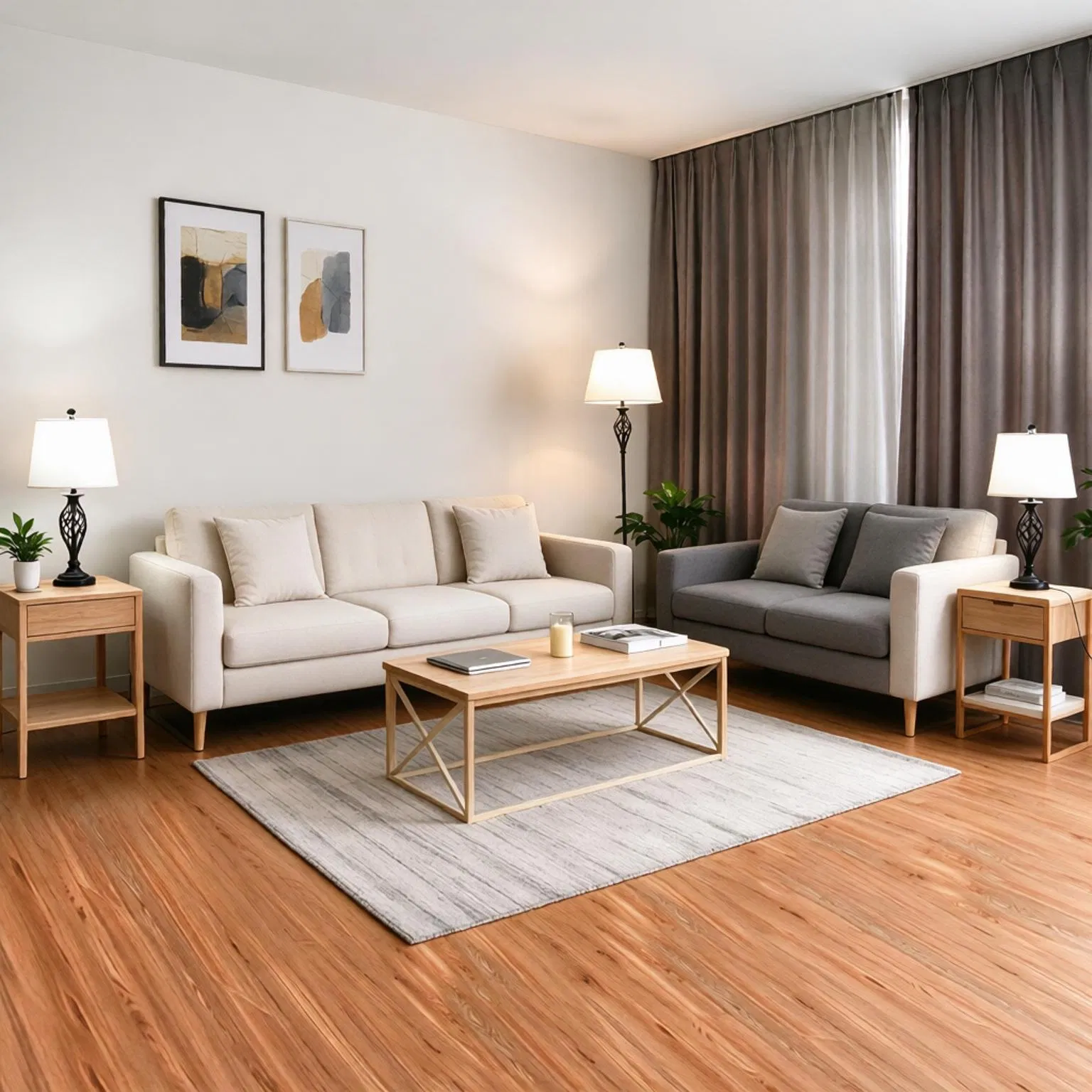

Photos from current listings. Actual item, color, and included accessories may vary.
Floor Lamp With Table Buying Guide
A floor lamp with table integrates an elevated light source with a small built-in shelf or tray, trading floor footprint for a compact furniture-plus-lighting footprint. The primary engineering trade-offs are base stability versus tabletop capacity and shade/arm adjustability versus structural wobble at the joint. The decision rule: buy only models with a weighted base (or wide-stance legs) and a metal-to-metal lamp-to-table connection; skip hollow plastic trays or thin MDF tops rated below 5 lb.
At a glance
- Category
- Lamps & Indoor Lighting
- Last updated
- Nov 22, 2026
Current offers
Highlights
- Base construction separates durable from wobbly: die-cast metal or solid wood plinths resist tip-over, while hollow molded plastic bases crack at the stem collar.
- Shelving attachment mechanics matter: welded or bolted steel brackets hold 8–11 lb, clamp-on or friction-fit trays typically deform past 5 lb.
- Adjustable arms use either a knurled friction hinge (holds position but loosens) or a locking swivel joint (stronger, fewer drift issues).
- Shade and socket compatibility splits models: E26 medium-base sockets take standard A19 LED bulbs up to 100 W equivalent, while integrated LED versions are sealed and non-replaceable.
Best use cases
- Best fit: bedside reading nook in small apartments — pick a 58–64 in overall height with a 12–14 in diameter tray and a dimmable E26 socket; skip tall 70 in+ models that block mattress clearance.
- Best fit: sofa-side console replacement — choose a C-clamp or weighted-footprint base under 14 in wide with a 10 lb tray for a drink and remote; skip tripod-leg models that splay past 20 in.
- Wrong fit: homes with toddlers or large dogs — narrow-footprint pedestal bases tip under lateral loads; skip unless the model includes an anti-tip wall strap.
- Wrong fit: rooms needing task-grade light for crafts — a table-integrated floor lamp's shade sits above eye level and casts downlight; choose an articulating pharmacy-style arm instead.
Buying tips
- Match height to seat: shade bottom should sit 36–42 in from the floor beside a sofa or chair, so choose total lamp height 58–64 in for seating and 50–55 in for bedside.
- Weight-check the base against the tray: a stable ratio is base weight at least 3× the rated tray load; a 5 lb tray needs a 15 lb base or a 16 in+ leg spread.
- Choose E26 socket with a rotary or 3-way switch for bulb flexibility; integrated LED models lock you into a fixed color temperature (typically 2700K–3000K).
- Confirm cord length (minimum 6 ft) and plug type before placing: a lamp centered in a room needs an extension or a floor outlet, not a 3 ft cord.
Specs
| Base Type | Weighted disc / tripod / C-clamp |
|---|---|
| Tray Load | 5–11 lb rated metal bracket |
| Socket / Bulb | E26 max 100W or integrated LED |
| Height Range | 50–64 in (bedside to sofa) |
Related searches
What to check before buying
- Measure the gap beside your sofa/bed: the base footprint plus 2 in clearance must fit without blocking walkways (target under 14 in wide).
- Check the tray load you actually need: a mug plus phone is under 3 lb, a laptop plus book is 6–8 lb; pick rated capacity accordingly.
- Verify outlet and switch access: inline foot switch is convenient for floor placement, but confirm the cord exits the base on the side you need.
- Confirm bulb type and wattage ceiling: E26 max 100 W equivalent or integrated LED; check color temperature and lumens (800–1100 lm is typical for reading).
FAQ
Data sources: eBay / Amazon listings and product attribute feeds. Updated Nov 22, 2026.
Some links on this page are affiliate links. If you buy after clicking one, we may earn a commission at no extra cost to you. This does not change which products appear here or their order. Affiliate disclosure.