
Photos from current listings. Actual item, color, and included accessories may vary.
Faux Olive Tree Buying Guide
A faux olive tree is a decorative artificial plant engineered to mimic the airy canopy and natural wood trunk of a Mediterranean olive tree without watering, light, or pest control. The core trade-off is material realism versus structural stability: PE-molded leaves and natural-wood trunks look convincing but require weighted, anti-tip bases, while cheap silk or PVC foliage fades and sheds. Choose PE foliage over silk/PVC for indoor longevity, and always match the base weight and height to your floor space and ceiling clearance.
At a glance
- Category
- Artificial Plants & Flowers
- Last updated
- Nov 22, 2026
Current offers
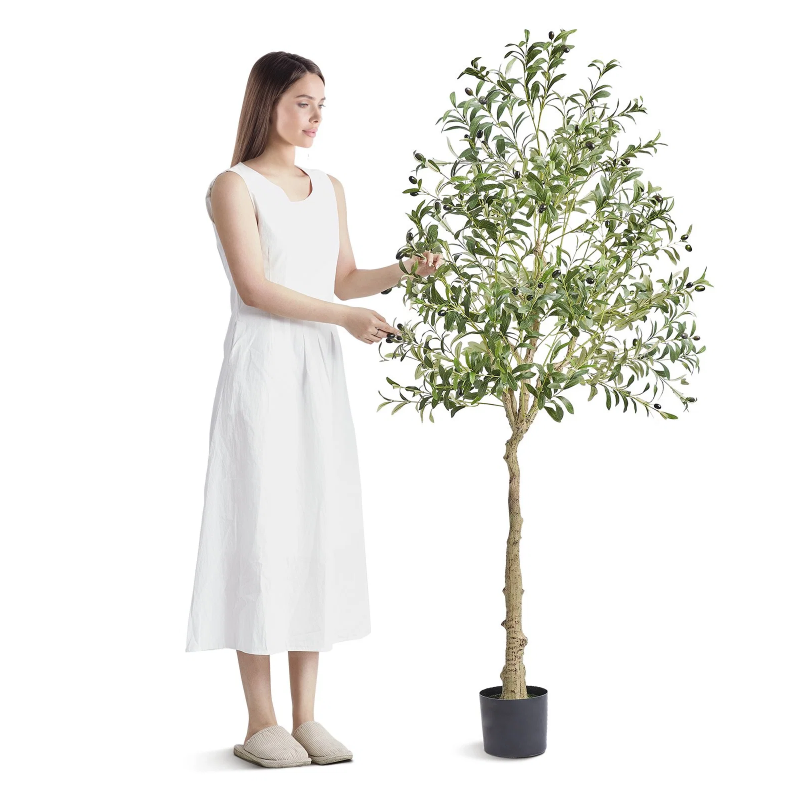 Artificial Olive Tree, 6 FT Tall Faux Plant, Secure PE Material & Anti-Tip Tilt Protection Low-Maintenance Lifelike Green Fake Potted For Home Office Warehouse Decor Indoor Outdoor$66.99View on Mallflare
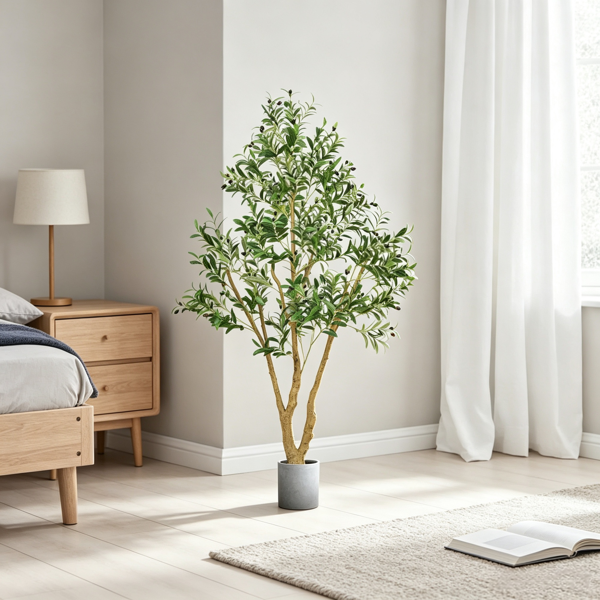 6FT Artificial Olive Tree, Natural Wood Trunk & Realistic Leaves, Faux Indoor Plant For Home, Office & Living Room Corner Decor$133.99View on Mallflare
Highlights
- PE (polyethylene) molded leaves hold color and shape far longer than silk or PVC, which fade and shed within a season or two of indoor exposure.
- Trunk construction splits into natural wood (realistic bark, heavier) versus molded plastic/resin (lighter, uniform); natural wood trunks usually pair with anti-tip weighted bases.
- Height tiers typically run 4 ft, 5 ft, 6 ft, and 7 ft; 6 ft is the most common floor-tree size, fitting standard 8–9 ft ceilings with headroom.
- Anti-tip designs use either weighted sand/cement bases or tilt-protection brackets; a tree over 5 ft without a weighted base is a stability risk in homes with pets or children.
Best use cases
- Best fit: a 6 ft PE-foliage tree with a natural wood trunk and weighted base for a living-room corner or office entry where realism and stability matter.
- Best fit: a 4–5 ft tree for narrow hallways, bedside corners, or apartment balconies where a full 6 ft canopy would crowd foot traffic.
- Wrong fit: silk or PVC foliage in a sunroom or south-facing window—fading and shedding accelerate under UV; choose PE instead.
- Skip: unweighted tall trees in households with toddlers or large pets—the tip-over risk outweighs any visual gain; specify anti-tip or weighted base.
Buying tips
- Match tree height to ceiling: for an 8 ft ceiling, a 6 ft tree plus a 12–18 in planter leaves comfortable visual headroom; 7 ft trees suit 9 ft+ ceilings.
- Specify PE leaves for any indoor placement; accept silk only for short-term staging or low-traffic decorative fill where fading is acceptable.
- For a 6 ft tree, planter base diameter should be at least 10–12 in with a weighted fill (sand or concrete) to resist tipping under light bumps.
- Check trunk material: natural wood trunks add realism and mass but may crack in very dry indoor air; resin trunks are uniform and moisture-stable.
Specs
| Leaf Material | PE molded vs silk vs PVC |
|---|---|
| Trunk Build | Natural wood vs resin/plastic |
| Height Tiers | 4 / 5 / 6 / 7 ft |
| Base Stability | Weighted anti-tip vs standard pot |
Related searches
What to check before buying
- Measure ceiling height and corner footprint: a 6 ft tree needs roughly 2–3 ft of canopy spread clearance from walls and furniture.
- Confirm floor type and traffic: weighted bases protect hardwood and tile from tip-scuffs; rugs may need a planter stabilizer pad.
- Check planter compatibility: many faux trees ship in a basic pot; a decorative cachepot 1–2 in larger in diameter hides the nursery pot cleanly.
- Verify indoor/outdoor rating: PE foliage tolerates covered patios, but direct sun and rain degrade most faux trees faster than indoor placement.
FAQ
Data sources: eBay / Amazon listings and product attribute feeds. Updated Nov 22, 2026.
Some links on this page are affiliate links. If you buy after clicking one, we may earn a commission at no extra cost to you. This does not change which products appear here or their order. Affiliate disclosure.