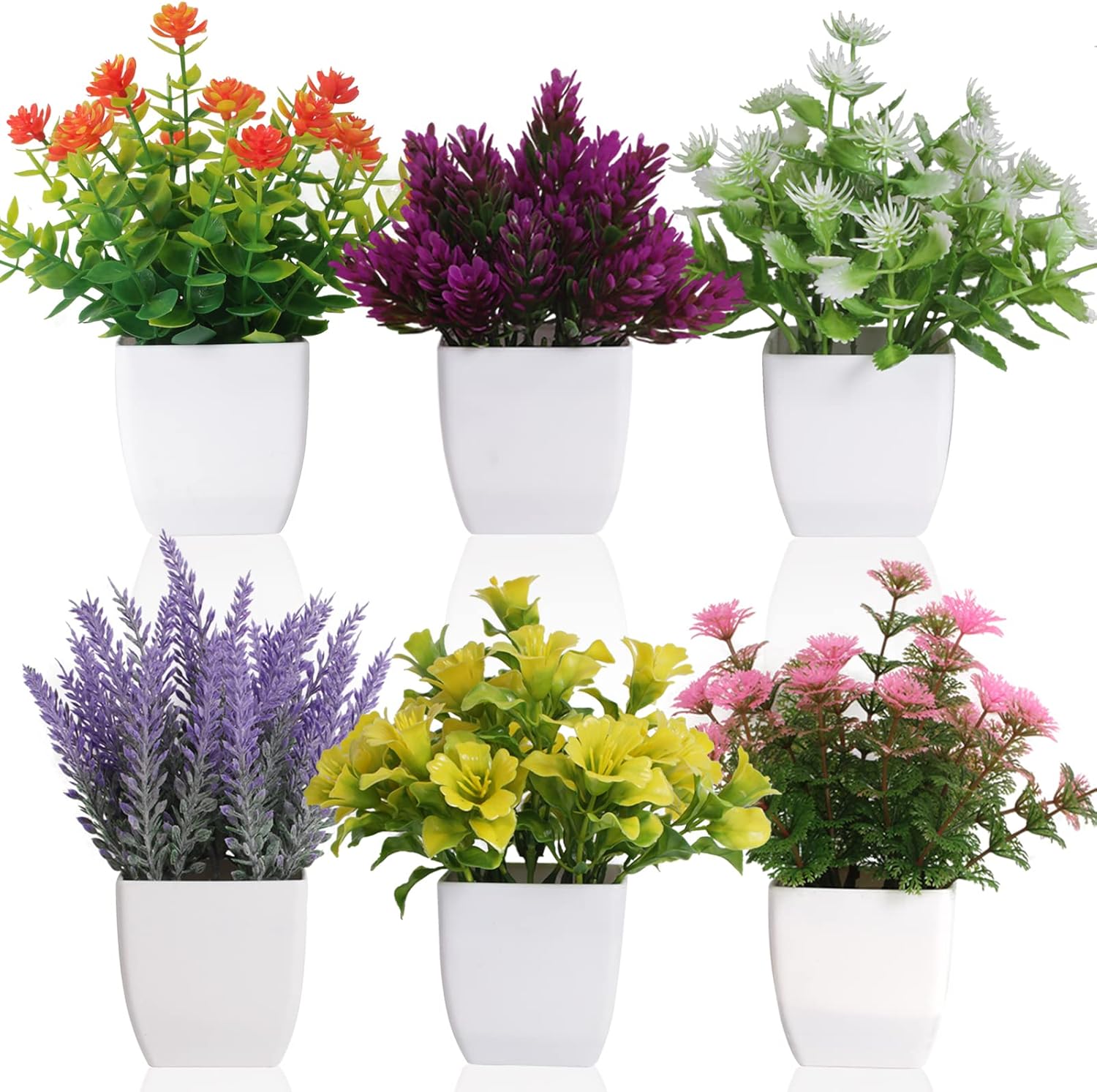

Photos from current listings. Actual item, color, and included accessories may vary.
Faux House Plant Buying Guide
Faux house plants are decorative, maintenance-free alternatives to live indoor plants, available across a wide range of realism, material quality, and size formats. The key trade-off is between lifelike appearance (silk, real-touch coatings, UV stabilization) and durability (fade resistance, pet safety, structural stability). The decision rule: match material grade and pot stability to your light exposure and placement (shelf vs. floor), and avoid bargain bundles with unstabilized dyes or tiny pots that tip over.
At a glance
- Category
- Artificial Plants & Flowers
- Last updated
- Nov 22, 2026
Current offers
Highlights
- Leaf material grades separate tiers: basic polyester silk (prone to fading) vs. real-touch polyurethane-coated silk (better texture and UV resistance) vs. PE/plastic (most durable for high-traffic areas).
- UV stabilization is the key fade-resistance spec; unstabilized silk or plastic yellows within 6–12 months in direct sun, while UV-treated versions last 3–5+ years indoors near windows.
- Pot stability matters as much as plant realism: lightweight plastic pots under 4 inches diameter tip easily; choose weighted or ceramic pots for floor and entryway placements.
- Size tiers drive placement logic: tabletop (6–20 inches tall) for desks and shelves, floor plants (30–60 inches) for corners and entryways, and hanging/trailing formats for high shelves.
Best use cases
- Best fit: desk or shelf styling with a 4–8 inch pot and 6–16 inch height, like compact faux succulents or mini greenery sets; skip oversized floor plants that overcrowd small surfaces.
- Best fit: low-light corners or north-facing rooms where live plants struggle; choose medium (20–36 inch) faux ficus, snake plant, or monstera with UV-stabilized leaves.
- Wrong fit: direct sun all day on a south-facing windowsill with unstabilized silk; pick UV-treated PE/plastic or move to filtered light to prevent rapid fading.
- Wrong fit: households with pets that chew plants; avoid small loose-leaf or berry-style picks and choose potted, securely anchored faux plants with no detachable small parts.
Buying tips
- Measure your surface first: a pot wider than one-third of the shelf or table depth risks being knocked off; standard tabletop pots are 3–6 inches wide.
- For floor plants, match pot diameter to plant height: a 30-inch faux tree needs at least an 8–10 inch pot base for stability and scale.
- Check leaf attachment: quality faux plants use glued or clipped stems; loose friction-fit leaves shed over time and look sparse within months.
- Prefer UV-stabilized or 'indoor/outdoor' labels for any placement within 3 feet of a window; standard silk is for interior, indirect-light spots only.
Specs
| Leaf Material | Silk / Real-touch PU / PE plastic |
|---|---|
| UV Resistance | UV-stabilized vs. basic (fades in sun) |
| Height Tier | Tabletop 6–20 in / Floor 30–60 in |
| Pot Type | Weighted ceramic vs. lightweight plastic |
Related searches
What to check before buying
- Measure the intended surface (shelf depth, table width, floor corner footprint) and confirm the pot base fits with at least 1 inch clearance.
- Check light exposure at the spot: direct sun within 3 feet of glass requires UV-treated or PE plastic foliage, not basic silk.
- Confirm pot type and weight: ceramic or weighted pots for floor and high-traffic spots; lightweight plastic only for protected shelves.
- Verify no small detachable parts (berries, loose leaves) if the plant is within reach of children or pets.
FAQ
Data sources: eBay / Amazon listings and product attribute feeds. Updated Nov 22, 2026.
Some links on this page are affiliate links. If you buy after clicking one, we may earn a commission at no extra cost to you. This does not change which products appear here or their order. Affiliate disclosure.