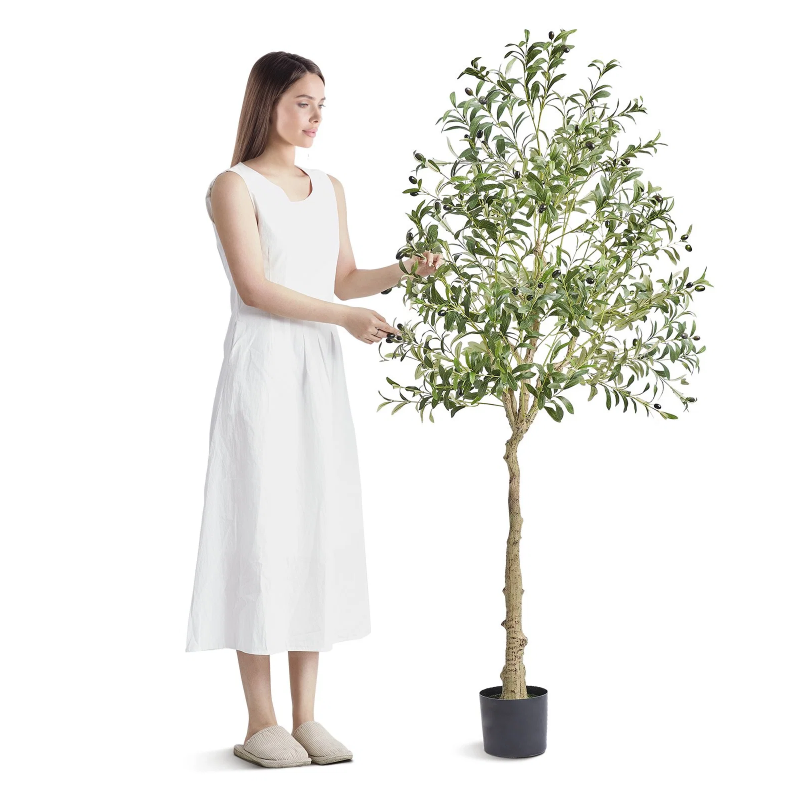

Photos from current listings. Actual item, color, and included accessories may vary.
Fake Olive Tree Buying Guide
A fake olive tree is a decorative faux plant that mimics the silvery-green foliage and slender branching of a real olive tree, typically built from PE (polyethylene) or silk-blend leaves on a natural-wood or plastic trunk. The core trade-off is realism versus stability: dense, UV-stabilized PE leaves look convincing but add top-heaviness, so base weight and anti-tip design determine whether a 6–7 ft tree stays upright. Choose a model with a weighted or tip-resistant base and ≥6 ft height for floor presence; skip lightweight unweighted trunks if the tree sits in foot-traffic areas.
At a glance
- Category
- Artificial Plants & Flowers
- Last updated
- Nov 22, 2026
Current offers
Highlights
- PE (polyethylene) leaves resist fading and tearing better than silk or polyester blends, especially near windows and outdoor patios.
- Anti-tip tilt protection or a weighted base is critical above 5 ft; top-heavy faux trees without it topple in households with pets or kids.
- Trunk construction separates tiers: natural wood trunks with realistic bark texture outperform molded plastic trunks at close viewing distance.
- UV-stabilized foliage is the key outdoor durability spec; indoor-only trees often skip UV treatment and fade within one season on a sunny balcony.
Best use cases
- Indoor living room or office corner: pick a 6–7 ft PE-leaf tree with a weighted planter base and natural-wood trunk for realism at eye level.
- Covered patio or sunroom: choose UV-stabilized PE foliage and a heavier base rated for wind; skip untreated silk trees that fade and shed.
- Small apartment or entryway: a 4–5 ft tree with a compact pot fits tight corners; avoid 7 ft models that overwhelm low ceilings and block walkways.
- High-traffic hallway or home with pets: prioritize anti-tip base weight and secure leaf attachment; skip lightweight drop-ship trees with unweighted pots.
Buying tips
- Match height to ceiling: a 6 ft tree needs at least 7 ft clearance to avoid a cramped look; 7 ft models suit 8–9 ft ceilings.
- Check pot/planter weight: a base under 2–3 lbs is unstable for a 6 ft tree; look for weighted or tip-resistant bases.
- Prefer PE over silk for durability and outdoor use; silk blends look softer but tear and fade faster with handling and sun.
- Confirm leaf attachment method: glued or wired leaves shed over time; heat-fused or reinforced attachment lasts longer in dusty or humid rooms.
Specs
| Leaf Material | PE vs silk/polyester blend |
|---|---|
| Height Range | 4–7 ft (indoor floor tree) |
| Base Type | Weighted / anti-tip vs standard pot |
| UV Rating | UV-stabilized vs indoor-only |
Related searches
What to check before buying
- Measure ceiling height and corner width; a 6 ft tree needs roughly 2–3 ft of spread and 7 ft clearance.
- Verify pot diameter and weight against your floor type; heavy pots can dent softwood floors without a felt pad.
- For outdoor placement, confirm UV-stabilized foliage and a base that won't tip in wind.
- Check assembly: most faux trees ship in 2–3 trunk sections; ensure the connector style matches expected stability.
FAQ
Data sources: eBay / Amazon listings and product attribute feeds. Updated Nov 22, 2026.
Some links on this page are affiliate links. If you buy after clicking one, we may earn a commission at no extra cost to you. This does not change which products appear here or their order. Affiliate disclosure.