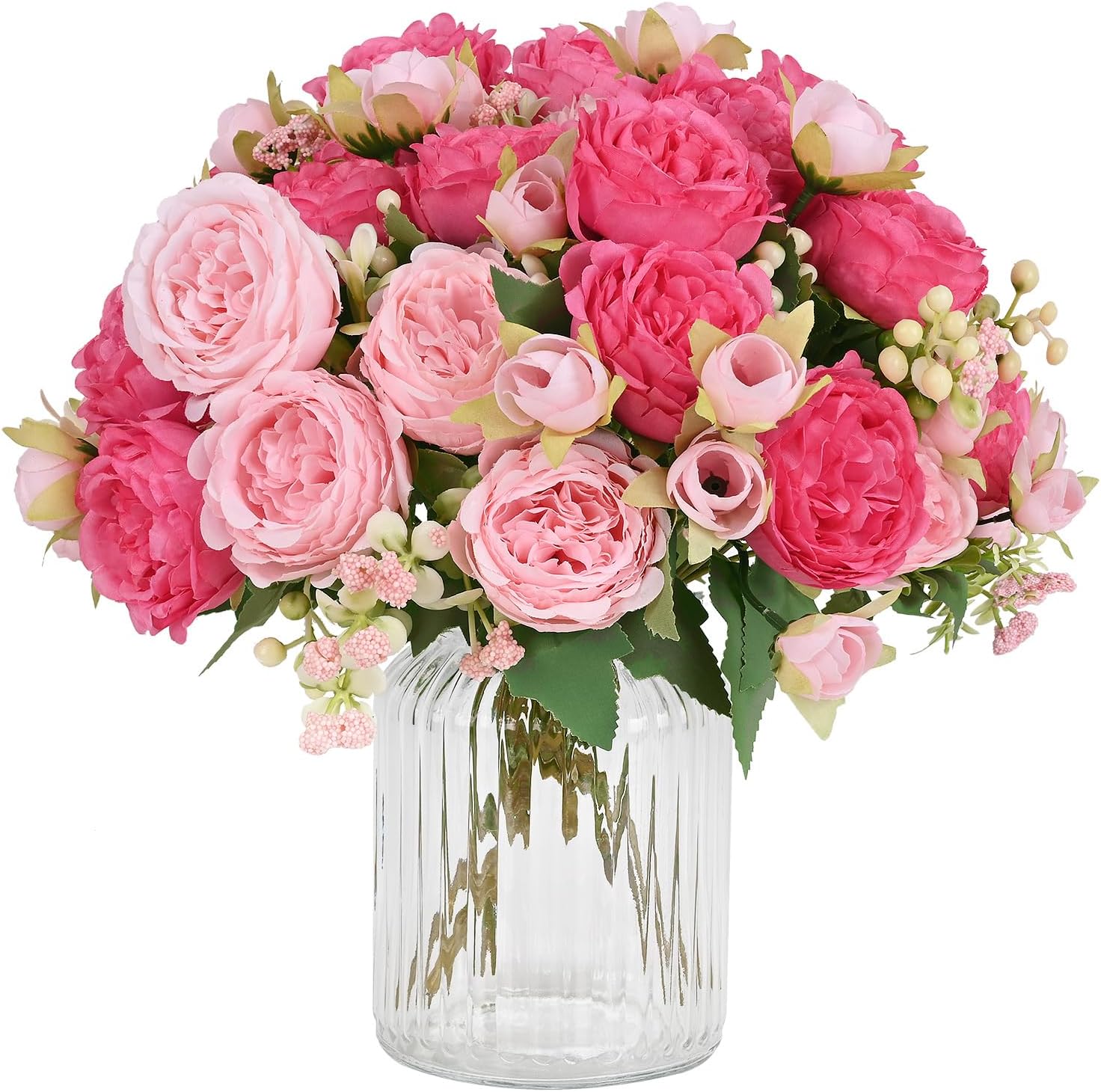

Photos from current listings. Actual item, color, and included accessories may vary.
Artificial Peony Flower Buying Guide
Artificial peony flowers replicate the dense, ruffled blooms of garden peonies using silk or polyester fabric over a plastic or wire stem. The core trade-off is between realistic fabric realism (multi-layer petals, hand-painted edges, wired stems) and low-cost construction (single-layer polyester, glued petals, thin wire); buyers should prioritize multi-layer silk-touch petals and bendable wire stems for durable, lifelike arrangements.
At a glance
- Category
- Artificial Plants & Flowers
- Last updated
- Nov 22, 2026
Current offers
Highlights
- Premium peonies use 3–5 layers of silk or polyester fabric per bloom with hand-painted or heat-embossed edges; budget versions use a single flat layer with printed color.
- Stem construction: high-grade stems have a full-length bendable wire core (14–18 gauge) wrapped in floral tape; cheap stems use thin 22+ gauge wire that kinks permanently.
- Bloom diameter ranges from 3–6 inches for standard bouquets; larger 6–8 inch blooms read as realistic in centerpieces but require wider vases.
- Stem length typically 12–20 inches; longer stems can be cut with wire cutters but cannot be re-joined, so measure vase height plus arrangement drop before trimming.
Best use cases
- Best fit: wedding centerpieces and event decor — choose bouquets with 6–8 inch multi-layer blooms and wired stems for arranging; skip single-layer blooms that look flat in photographs.
- Best fit: home table styling in low-traffic areas — select silk-touch polyester with UV-resistant coating if near windows; avoid uncoated bright dyes that fade within months.
- Wrong fit: outdoor garden bedding exposed to rain and direct sun — artificial peonies are not waterproof; fabric blooms sag and fade, and metal stems rust. Use UV-stabilized outdoor-specific faux flowers instead.
- Wrong fit: children's play areas or pet-heavy homes — small glued petals and wire tips detach; choose felt or plush alternatives if ingestion risk exists.
Buying tips
- Count petals per bloom: realistic peonies have 40+ petals across multiple layers; fewer than 20 petals per flower signals a low-cost single-layer build.
- Check stem wire gauge: 14–18 gauge holds bends under arrangement weight; 22+ gauge wire bends under its own bloom and won't support heavy centerpieces.
- Match bloom size to vessel: 3–4 inch blooms suit bud vases and small arrangements; 6–8 inch blooms need a vase opening of at least 4 inches and a weighted base.
- Prefer bouquets with individual stems over pre-tied bunches — you can separate, trim, and re-bend stems for custom arrangements; pre-tied bunches limit placement.
Specs
| Petal Material | Silk / Polyester / Blend |
|---|---|
| Bloom Diameter | 3–8 in (standard 6 in) |
| Stem Core | Wire 14–18 ga vs 22+ ga |
| Stem Length | 12–20 in (cuttable) |
Related searches
What to check before buying
- Measure your vase height and opening diameter: stem length should exceed vase height by 2–4 inches for a natural drop, and bloom width should not exceed 1.5× the vase opening.
- Confirm indoor placement away from direct sun and moisture: silk/polyester blooms fade under UV and degrade in humidity; keep 12+ inches from radiators and steamy kitchens.
- Check petal attachment: hand-glued or stitched petals last longer than heat-tacked single points; inspect the bloom base for loose edges before arranging.
- Verify stem count per bouquet: standard bouquets ship with 2–6 stems; for a full centerpiece you typically need 5–8 stems, so order multiple bouquets.
FAQ
Data sources: eBay / Amazon listings and product attribute feeds. Updated Nov 22, 2026.
Some links on this page are affiliate links. If you buy after clicking one, we may earn a commission at no extra cost to you. This does not change which products appear here or their order. Affiliate disclosure.