
Photos from current listings. Actual item, color, and included accessories may vary.
Artificial Palm Plant Buying Guide
Artificial palm plants are decorative faux trees and floor plants that mimic fan, date, or areca palms using molded PE or fabric leaves on a natural-wood, metal, or plastic trunk. The decisive trade-off is leaf material and trunk anchoring: molded PE leaves resist fading and hold shape in sunrooms, while fabric leaves look softer indoors but crush and fade faster. Buy PE or PU-molded foliage with a weighted base for any sun-exposed or high-traffic spot; treat fabric-leaf and unweighted pots as light, indoor-only decor.
At a glance
- Category
- Artificial Plants & Flowers
- Last updated
- Nov 22, 2026
Current offers
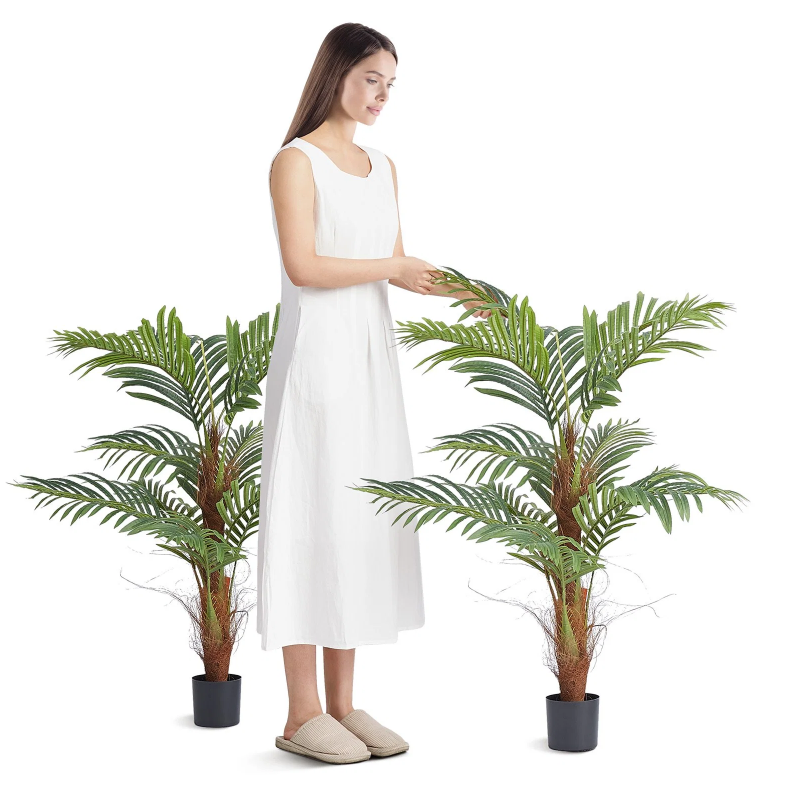 Artificial Palm Tree, 4 FT Tall Faux Plant, Secure PE Material & Anti-Tip Tilt Protection Low-Maintenance Lifelike Green Fake For Home Office Warehouse Decor Indoor Outdoor$70.99View on Mallflare
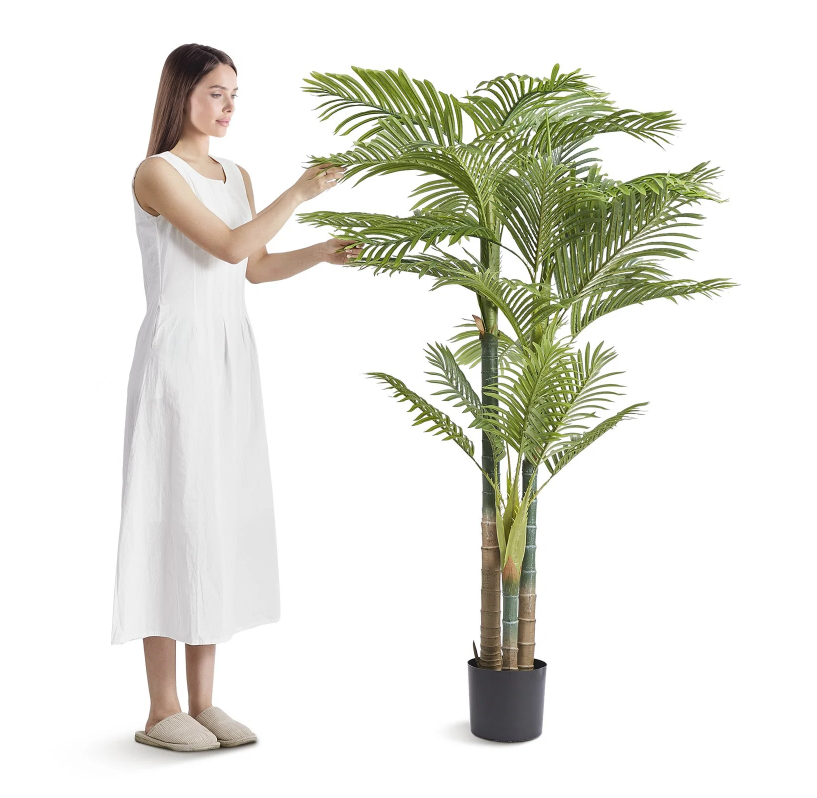 Artificial Gold Cane Palm Tree, 6.5 FT Tall Faux Plant, PE Material & Anti-Tip Tilt Protection Low-Maintenance Lifelike Green Fake For Home Office Warehouse Decor Indoor Outdoor$78.99View on Mallflare
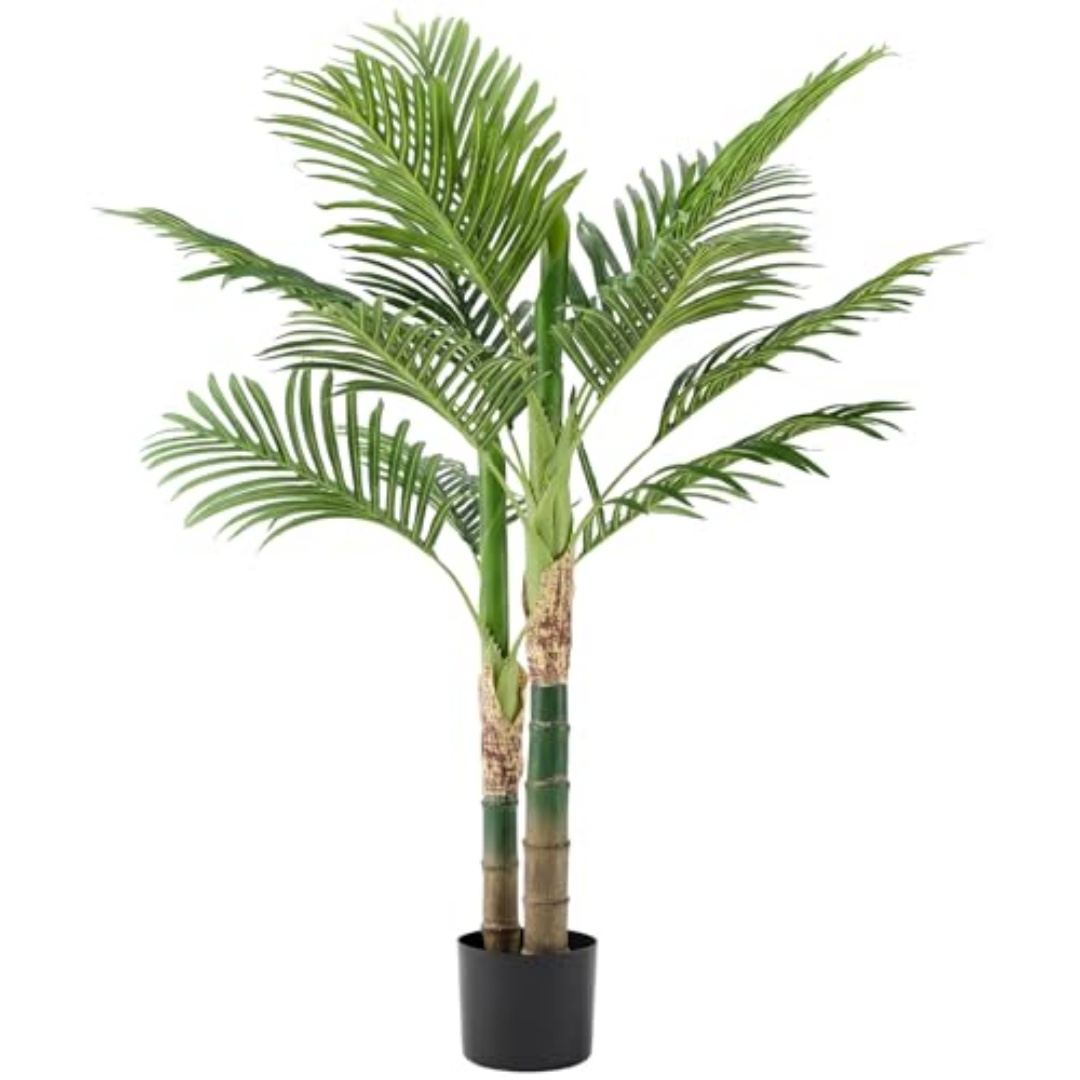 Artificial Palm Trees, Tall Plants With Realistic Indoor Leaves In Black Flowerpots$104.99View on Mallflare
Highlights
- Molded PE (polyethylene) leaves are UV-stabilized and hold crimped frond shape; fabric or polyester leaves fade and crease within one to two seasons near windows.
- Trunk construction splits into real-wood segments (natural texture, heavier, needs a rigid pot) and hollow plastic or metal-core poles (lighter, cheaper, prone to leaning).
- Height tiers cluster at 4 ft (table-to-floor accent), 6 to 6.5 ft (standard floor palm), and 7 ft plus (architectural corner or atrium); leaf spread scales roughly with height.
- Anti-tip designs use either a weighted concrete or sand-filled base or a tilt-restraint strap and bracket; freestanding slim pots under about 8 in diameter tip easily on carpet.
Best use cases
- Best fit: a 6 to 6.5 ft PE palm with a weighted pot anchors a bare living-room or office corner; skip 4 ft fabric models there—they read as tabletop décor and look sparse from across the room.
- Best fit: a 4 ft PE palm on a console or beside a desk suits apartments and entryways; wrong fit: 7 ft plus palms in low-ceiling rooms under 8 ft, where fronds crush against the ceiling.
- Best fit: UV-stabilized PE foliage for covered patios, sunrooms, and pool decks; wrong fit: fabric-leaf or unstated-material palms outdoors, which fade, sag, and shed within a season.
- Best fit: a slim-profile palm (under about 14 in pot width) for narrow hallway niches and behind sofas; skip wide-spreading fan palms where foot traffic will brush and bend the fronds.
Buying tips
- Match height to ceiling: a 6.5 ft palm needs at least 8 ft clearance for frond spread; choose 4 to 5 ft under 8 ft ceilings and 7 ft plus only in rooms with 9 ft or higher ceilings.
- Pick molded PE or PU leaves over polyester fabric for any spot within 3 ft of a window or door—UV exposure is the main cause of fading and brittleness.
- Check the base: a pot at least 8 to 10 in wide and weighted with concrete or sand resists tipping; a hollow plastic pot needs added weight or a corner placement against a wall.
- For outdoor or sunroom use, confirm UV-stabilized PE and a rust-proof or sealed trunk; indoor-only models use mild-steel wire that can rust in humid, covered patios.
Specs
| Leaf Material | Molded PE/PU vs polyester fabric |
|---|---|
| Height Tiers | 4 ft accent / 6-6.5 ft floor / 7 ft+ atrium |
| Trunk Build | Real wood vs plastic/metal core |
| Base Anchoring | Weighted concrete/sand vs hollow + strap |
Related searches
What to check before buying
- Measure ceiling height and the footprint of the intended corner or console; subtract frond spread (roughly 2 to 3 ft per side at 6 ft height) from walkway clearance.
- Confirm floor type and traffic: weighted bases protect carpet and laminate from tip-overs; on thick pile carpet, a wider, heavier base is required.
- For outdoor or sunroom placement, verify UV-stabilized PE leaves and a sealed or stainless trunk; skip fabric foliage and untreated metal cores.
- Check pot compatibility if repotting: real-wood trunk segments need a rigid, weighted planter, while plastic-pole models can sit in a lighter decorative pot.
FAQ
Data sources: eBay / Amazon listings and product attribute feeds. Updated Nov 22, 2026.
Some links on this page are affiliate links. If you buy after clicking one, we may earn a commission at no extra cost to you. This does not change which products appear here or their order. Affiliate disclosure.