
Photos from current listings. Actual item, color, and included accessories may vary.
Artificial Outdoor Shrub Buying Guide
Artificial outdoor shrubs are UV-stabilized faux plants built to hold shape and color on porches, patios, and entryways where live plants fail. The decisive trade-off is PE (polyethylene) vs. silk/PVC construction and UV rating: PE resists fading and shedding for multiple seasons, while cheap silk/polyester blends bleach and disintegrate within one summer. Buy PE or UV-rated plastic foliage with anchored stakes or weighted pots for exposed sites; skip silk blends and unstabilized foam for outdoor use.
At a glance
- Category
- Artificial Plants & Flowers
- Last updated
- Nov 22, 2026
Current offers
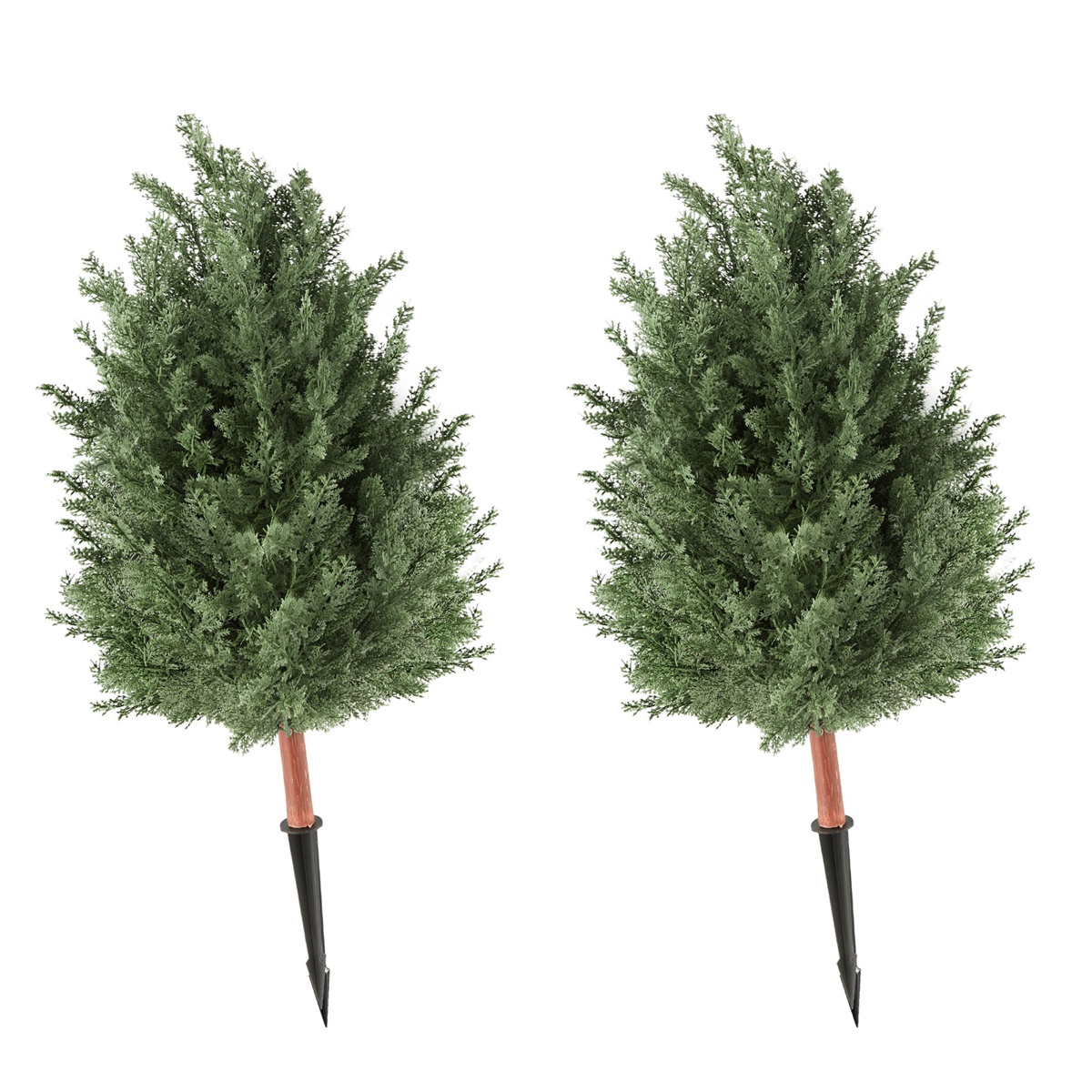 Artificial Topiary Cedar Bush 3 Ft Set Of 2 Greenery Fake Shrubs, PE Faux Trees With Ground Spikes, Indoor & Outdoor Green Plant For Front Door, Entryway, Porch, Balcony, Patio, Garden$65.99View on Mallflare
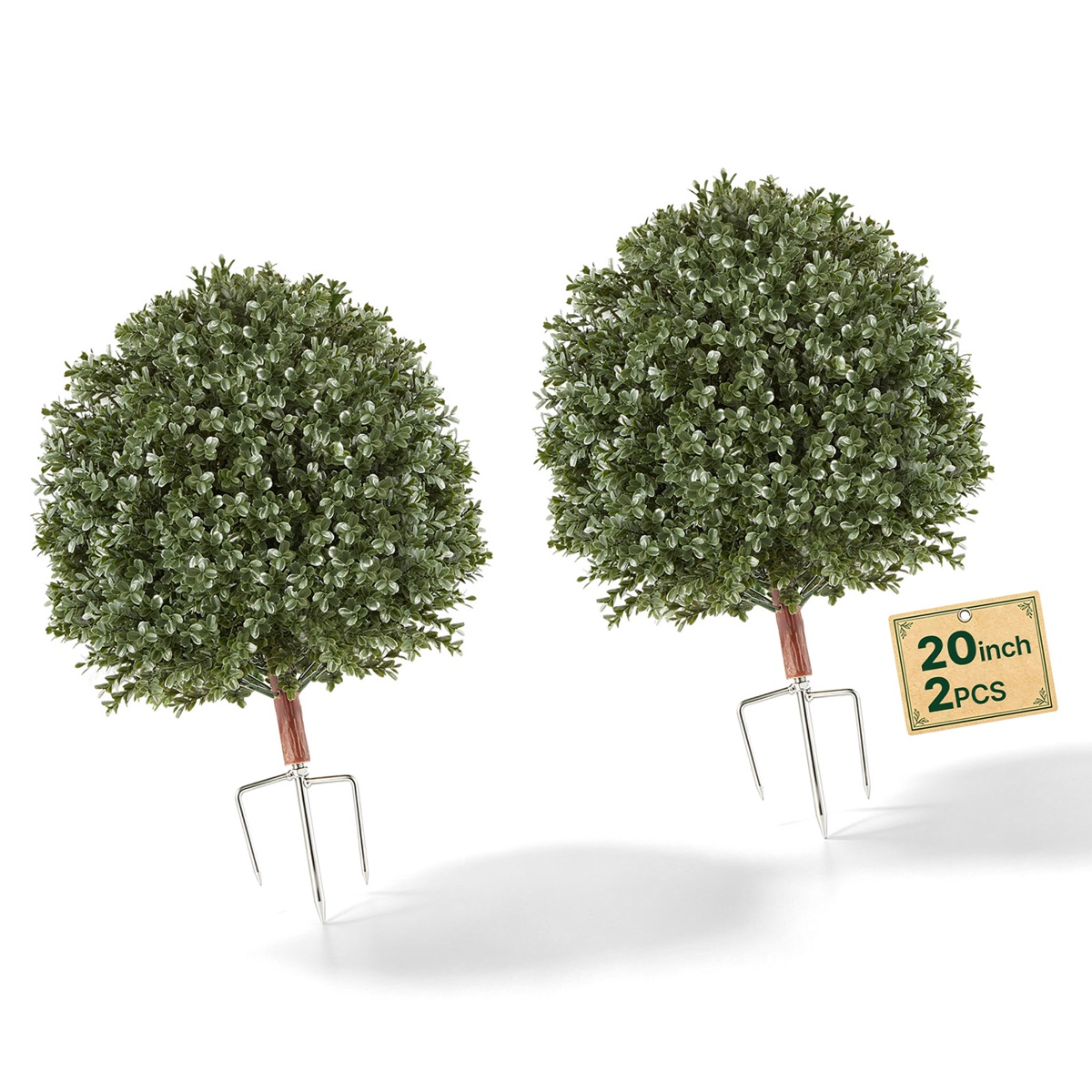 Artificial Topiary Ball Boxwood Bush 20 In Set Of 2 Green Fake Shrubs, PE Faux Trees With Metal Ground Spikes, Indoor & Outdoor Plant For Front Door, Entryway, Porch, Balcony, Patio, Garden$68.99View on Mallflare
Highlights
- PE (polyethylene) molded foliage is UV-stabilized and colorfast for 2–5 outdoor seasons; silk/polyester leaves fade and shed within months of direct sun.
- Topiary formats ship as pre-shaped balls or cones on a metal or plastic frame — frame gauge and stake diameter determine wind resistance on open porches.
- Ground-spike bases anchor into soil or planters; weighted-pot bases are required for hardscape (concrete, deck, stone) where spikes cannot penetrate.
- Sizes range from 20-inch tabletop topiary balls to 3-foot cedar bushes; scale should equal roughly one-third to one-half the height of the door or planter it flanks.
Best use cases
- Best fit: pair 20-inch PE boxwood topiary balls in weighted planters to flank a front door on a covered porch — skip silk versions that fade under indirect UV.
- Best fit: 3-foot PE cedar bushes with ground spikes for garden beds and walkway edges; skip spike bases on concrete patios and use sand-weighted pots instead.
- Wrong fit: silk or polyester blends for fully exposed, south-facing entries — they bleach and shed within one season; choose UV-rated PE only.
- Wrong fit: oversized 3-foot topiary on a narrow balcony railing — use 16–20 inch ball topiary for small footprints and wind-exposed ledges.
Buying tips
- Choose PE (polyethylene) over silk/polyester for any outdoor placement; PE is UV-stabilized and holds color 2–5 seasons, silk fades in months.
- Match topiary diameter to container: ball diameter should be about 1.5–2× the planter rim width so the shrub reads as rooted, not floating.
- For wind-exposed porches, select shrubs with metal ground spikes at least 6 inches long or use a weighted pot rated for the shrub height.
- Scale 3-foot shrubs for ground beds and door flanks; 20-inch balls suit tabletops, railing planters, and tight entryways.
Specs
| Foliage Material | UV-rated PE vs. silk/polyester |
|---|---|
| UV Durability | 2–5 seasons (PE) / 1 season (silk) |
| Base Type | Ground spike vs. weighted pot |
| Topiary Size | 20 in ball to 3 ft bush |
Related searches
What to check before buying
- Measure door width and planter rim: two 20-inch balls suit a standard 36-inch door; 3-foot shrubs need at least 18 inches of clearance per side.
- Confirm surface: ground spikes require soil or turf; concrete, deck, and stone need weighted pots or stands instead.
- Check sun exposure: full-sun, south-facing entries demand UV-rated PE; shaded porches tolerate mid-grade PE or high-quality silk.
- Verify pot compatibility: topiary balls ship pre-shaped and need a container with a rim wide enough to hide the spike base and frame.
FAQ
Data sources: eBay / Amazon listings and product attribute feeds. Updated Nov 22, 2026.
Some links on this page are affiliate links. If you buy after clicking one, we may earn a commission at no extra cost to you. This does not change which products appear here or their order. Affiliate disclosure.