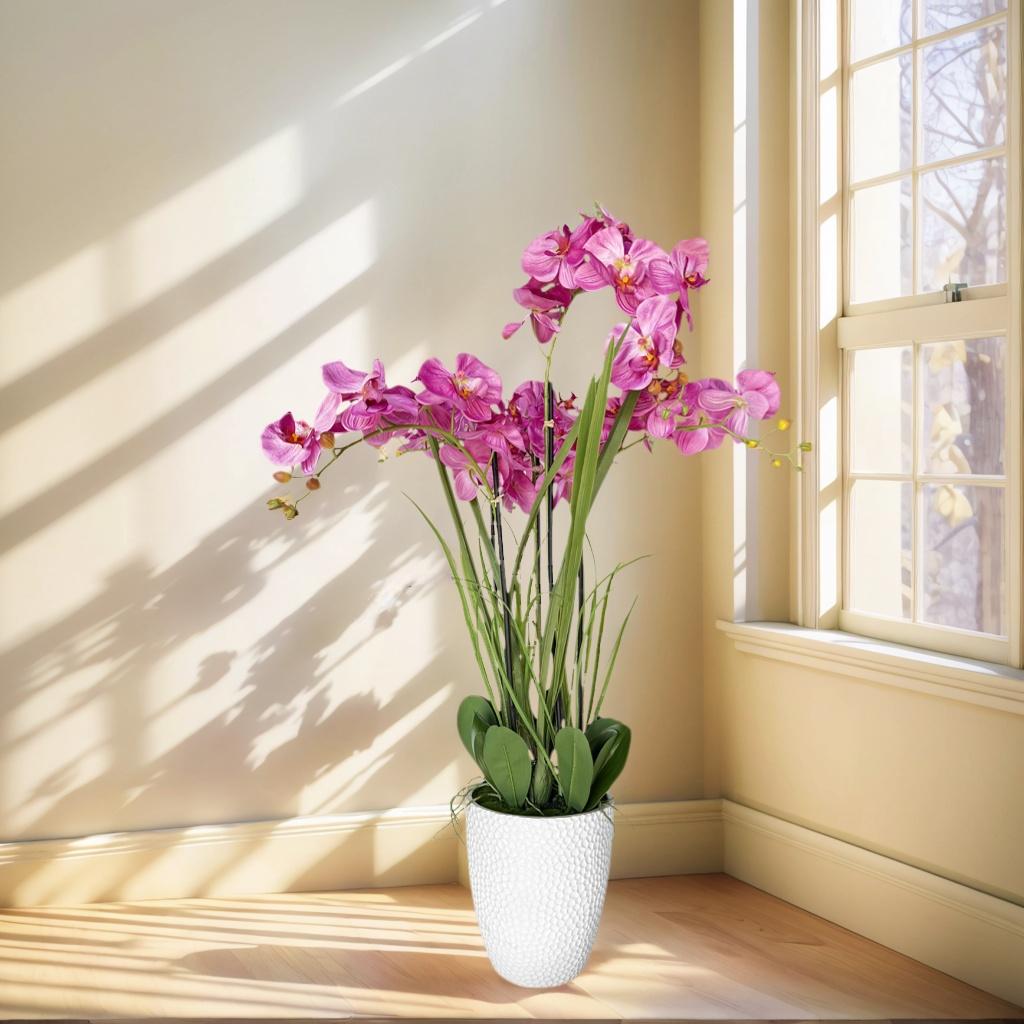

Photos from current listings. Actual item, color, and included accessories may vary.
Artificial Orchid Flower Buying Guide
Artificial orchid flowers are decorative, low-maintenance replicas used to add permanent greenery and color to interiors. The main trade-off is realism versus durability: cheap silk petals fade and shed, while quality latex or PU petals with wired stems hold shape and color for years. The clear decision rule is to buy real-touch latex or PU blooms with a bendable wire core and UV-resistant finish, and skip dyed polyester silk on flimsy plastic stems.
At a glance
- Category
- Artificial Plants & Flowers
- Last updated
- Nov 22, 2026
Current offers
Highlights
- Real-touch petals made from latex or PU are thicker, hold a natural curl, and resist fading better than thin dyed polyester silk.
- A bendable wire core inside each stem lets you reshape and pose the orchid; plastic-only stems snap and droop over time.
- UV-resistant coatings slow yellowing and color loss on sun-exposed arrangements; uncoated silk fades within months near windows.
- Potted arrangements with weighted resin or ceramic bases stand stable on tabletops; lightweight foam bases tip easily.
Best use cases
- Best fit: a living-room or dining table centerpiece needs a potted arrangement with a weighted resin base and real-touch latex petals for close viewing.
- Best fit: a bathroom or windowless office wants a low-light-tolerant artificial orchid on a shelf; choose a compact potted stem with UV-stable finish if near a window.
- Wrong fit: outdoor patio or full-sun balcony display; standard artificial orchids fade and degrade unless explicitly UV-rated for exterior use—skip uncoated silk.
- Wrong fit: a large floor-standing statement piece; single-tabletop potted orchids are too small—choose a taller multi-stem floor arrangement instead.
Buying tips
- Match stem height to your surface: tabletop orchids typically run 12–24 inches overall; floor arrangements need 30 inches or taller to read as a statement.
- Pick latex or PU petals over polyester silk for close-range realism; silk is acceptable only for distant or high-shelf placement.
- Check the pot: weighted resin or ceramic bases resist tipping; foam or hollow plastic pots need added weight or a heavier planter.
- For sun-adjacent spots, choose UV-resistant or UV-stabilized finishes; standard dyed silk fades noticeably within a season of direct light.
Specs
| Petal Material | Latex/PU real-touch vs polyester silk |
|---|---|
| Stem Core | Bendable wire vs rigid plastic |
| Pot Base | Weighted resin/ceramic vs foam |
| UV Resistance | UV-stabilized vs standard dyed |
Related searches
What to check before buying
- Measure your table or shelf footprint and clearance: potted orchids need roughly 6–10 inches of base diameter and headroom for stems.
- Confirm the arrangement ships as one potted unit versus loose stems; loose stems require your own vase and filler.
- Check the intended room's light exposure—direct sun demands UV-resistant materials, while shaded rooms tolerate standard silk.
- Verify the pot material and weight so the arrangement stays stable on glass, polished wood, or narrow console tables.
FAQ
Data sources: eBay / Amazon listings and product attribute feeds. Updated Nov 22, 2026.
Some links on this page are affiliate links. If you buy after clicking one, we may earn a commission at no extra cost to you. This does not change which products appear here or their order. Affiliate disclosure.