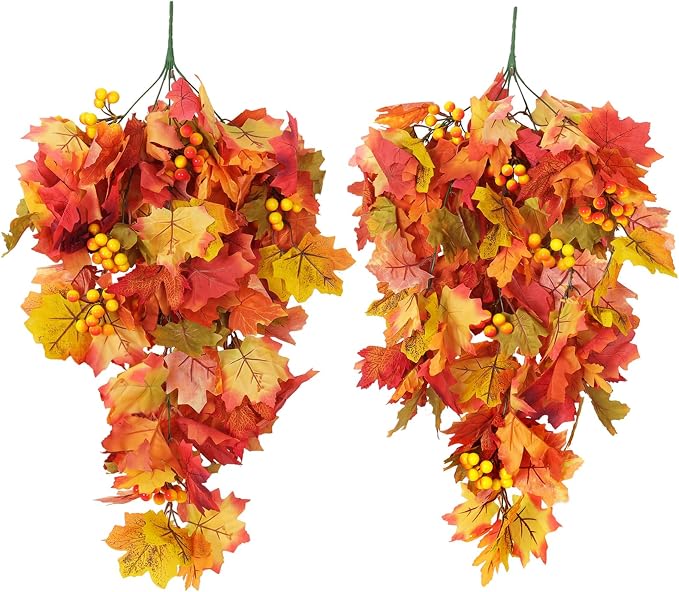

Photos from current listings. Actual item, color, and included accessories may vary.
Artificial Hanging Plant Buying Guide
Artificial hanging plants are decorative vines, garlands, and trailing foliage used to soften ceilings, shelves, and outdoor overhangs without watering or sunlight. The primary trade-off is between UV-stabilized, colorfast plastics for outdoor exposure and softer, denser silk or polyester blends for indoor realism. Choose outdoor-grade UV-treated polyethylene or EVA for patios and porches; choose silk-blend or fabric leaves for interior styling where sunlight is indirect.
At a glance
- Category
- Artificial Plants & Flowers
- Last updated
- Nov 22, 2026
Current offers
Highlights
- UV-stabilized polyethylene and EVA are the only leaf materials rated for sustained outdoor exposure; untreated silk fades and brittle-cracks within one season.
- Outdoor vine lengths typically run 6–12 ft per strand, while indoor trailing plants use 3–7 ft strands with denser leaf counts per foot.
- Realistic indoor vines use silk or polyester leaves with printed veining and wire-core stems; budget versions use flat-dyed plastic with visible mold seams.
- Hanging hardware is not included with most garlands—plan on ceiling hooks rated for the total wet weight, which roughly doubles for outdoor use.
Best use cases
- Best fit: covered patio or pergola with indirect light—pick UV-stabilized polyethylene vines with wire-core stems so you can re-shape them seasonally.
- Best fit: interior shelf, cabinet top, or curtain rod—choose silk-blend or polyester trailing plants with dense leaf counts for close viewing.
- Wrong fit: fully exposed south-facing wall in high-wind zone—skip lightweight garlands and use pre-potted artificial topiary or anchored trellis instead.
- Best fit: seasonal fall decor—use berry-and-leaf garlands as accent layers over greenery rather than as stand-alone outdoor plants.
Buying tips
- Measure your drop: ceiling height minus 12 in clearance gives maximum strand length; for a 9-ft ceiling, choose strands 6 ft or shorter to avoid floor contact.
- For outdoor use, confirm 'UV-stabilized' or 'UV-resistant' on the leaf material—not just 'outdoor safe' on the packaging, which often means only the pot is weatherproof.
- Count leaf nodes per foot: indoor display vines should have 8–12 leaf clusters per foot; outdoor garlands can run 4–8 per foot because they are viewed from a distance.
- Match stem core to application: wire-core stems hold shape on arches and railings; plastic-molded stems are stiffer and better for straight swags but kink permanently.
Specs
| Leaf Material | UV polyethylene / Silk-polyester blend |
|---|---|
| Strand Length | 3–12 ft per vine |
| Stem Core | Wire-core vs plastic-molded |
| UV Rating | UV-stabilized (outdoor) vs none (indoor) |
Related searches
What to check before buying
- Ceiling or mounting surface: confirm you can install a hook rated for at least twice the dry weight—wet outdoor plants gain significant water weight.
- Sun exposure: full sun requires UV-stabilized polyethylene; indirect or shaded areas tolerate silk and polyester blends.
- Humidity and rain: covered porches are fine for most outdoor grades; open rain exposure demands drainage-friendly mounts and mildew-resistant leaf coatings.
- Companion parts: hanging chains, S-hooks, and ceiling anchors are usually sold separately—budget for them before choosing strand length.
FAQ
Data sources: eBay / Amazon listings and product attribute feeds. Updated Nov 22, 2026.
Some links on this page are affiliate links. If you buy after clicking one, we may earn a commission at no extra cost to you. This does not change which products appear here or their order. Affiliate disclosure.